
Ask the clinic · Enhance Dental Centre · 9 min read
Most root canals take 60 to 90 minutes and are finished in one or two appointments. A front tooth with one root can take about an hour, while a molar with 3 or 4 canals can take 90 minutes or more. It’s a common, predictable procedure, and the endodontics team will give you a time estimate before starting so you can plan your day.
Root canals have a reputation they don’t deserve. The pain people remember is the infection. The treatment is what relieves it, and with modern freezing it usually feels much like a filling.
Saving your natural tooth is almost always better than removing it. A tooth extraction is sometimes needed when a tooth can’t be saved, but keeping the tooth protects your bite and jawbone.
If a tooth does need to come out, dental implants can replace it well. The best plan, though, is catching decay early through regular preventive dental care, and if you need directions to the dental clinic, it’s on Google Maps.
Quick answer
A root canal usually takes 60 to 90 minutes. Front teeth are quickest, around 45 to 60 minutes. Molars take 90 minutes or more. Many are done in a single visit, while infected or complex teeth may need 2. A crown is often placed afterward at a separate appointment.
Part 1What is a root canal?
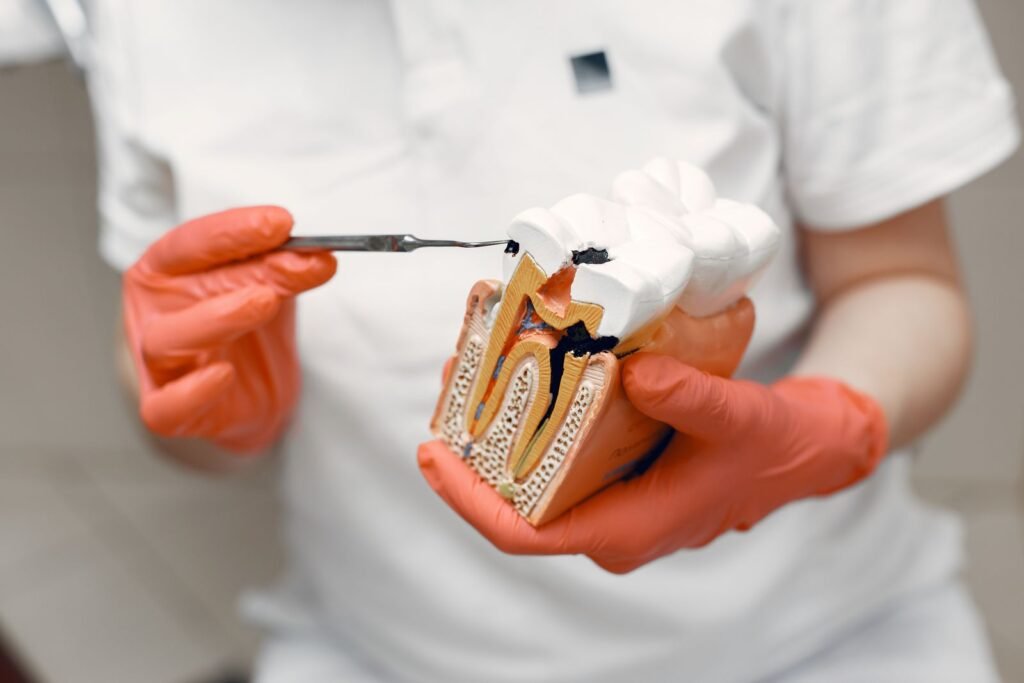
A root canal (endodontic treatment) removes infected or inflamed nerve tissue from inside a tooth. The space is cleaned, disinfected, filled, and sealed.
Inside every tooth is the pulp, a soft core of nerves and blood vessels. When deep decay, a crack, or an injury lets bacteria reach the pulp, it becomes inflamed or infected. The pulp can’t heal itself once that happens. Removing it saves the rest of the tooth.
Part 2Why timing varies from tooth to tooth
The biggest factor is how many canals the tooth has. More canals mean more cleaning and shaping.
Other factors that affect timing
- Infection level. A badly infected tooth may need medication placed inside and a second visit to let it settle.
- Curved or narrow canals. Older teeth and some molars have tricky anatomy that takes more care.
- Previous treatment. Redoing an old root canal (retreatment) takes longer.
- Access. A limited mouth opening or a tooth far back can add time.
- Getting numb. Inflamed teeth sometimes take extra time and freezing to get fully comfortable.
Part 3One visit or two?
Many root canals are finished in a single visit. Two visits are more common when:
- There’s a large infection or abscess
- The tooth is draining or very swollen
- The canals are complex or calcified
- The procedure is a retreatment of an older root canal
Between visits, a medicated dressing sits inside the tooth with a temporary filling on top. This helps calm the infection.
Part 4Step by step: what happens during a root canal
- Diagnosis and X-rays. Your dentist confirms which tooth needs treatment and studies the root shape.
- Freezing. Local anesthetic numbs the tooth and surrounding area.
- Isolation. A thin rubber sheet (dental dam) keeps the tooth clean and dry, and stops you from swallowing anything.
- Access. A small opening is made in the top of the tooth.
- Cleaning and shaping. Small instruments remove the pulp and shape the canals.
- Disinfection. The canals are rinsed with antibacterial solutions.
- Filling. The canals are filled with a rubber-like material called gutta-percha and sealed.
- Temporary or permanent filling. The access opening is closed.
- Crown (later). Back teeth usually need a crown within a few weeks to protect them from cracking.
Part 5Signs you might need a root canal
Lingering sensitivity to hot or cold that lasts after the trigger is gone.
Pain when biting or a tooth that feels “high” or tender.
Swelling or a gum bump near one tooth, sometimes with a bad taste.
Other signs include a toothache that wakes you up, a tooth that has darkened, and tender gums around one tooth. Sometimes there are no symptoms at all, and the problem shows up only on an X-ray. That’s one reason regular checkups matter.
Part 6Will it hurt? What comfort looks like today
Most people are surprised by how uneventful a root canal feels. Here’s why:
- Better anesthetics. Modern local anesthetics are strong and reliable. For very inflamed teeth, dentists can add extra freezing techniques.
- Rotary instruments. Flexible, motor-driven files clean canals faster and more smoothly than older hand tools.
- Digital imaging. X-rays and, when needed, CBCT scans show the root shape before treatment, so there are fewer surprises.
- Breaks when you need them. You can ask to rest your jaw at any point.
If you’re anxious, tell the team when you book. Knowing the plan, bringing headphones, and agreeing on a stop signal all help.
Part 7Where does the crown fit in the timeline?
Think of the full treatment as two parts. The root canal treats the inside of the tooth. The crown protects the outside.
For back teeth, the crown is usually placed 1 to 4 weeks after the root canal. It takes 1 or 2 visits, depending on whether the crown is made in a lab or in the office. Until then, a temporary filling protects the tooth, but it isn’t designed for heavy chewing.
So, while the root canal itself takes about 60 to 90 minutes, the whole process from start to finished crown often spans 2 to 5 weeks.
Part 8Recovery: how long until you feel normal?
The procedure itself is quick. Recovery is usually short too.
- First 1 to 2 days: Mild tenderness, especially when biting. Over-the-counter pain relief usually helps.
- Days 3 to 5: Most people feel back to normal.
- Until your crown: Avoid chewing hard foods on that tooth. It’s more fragile until it’s protected.
Safety note
Call your dentist if you have severe pain that gets worse after 3 days, swelling that grows, a fever, an allergic reaction to medication, or if your temporary filling falls out. If you have swelling that affects breathing or swallowing, go to the emergency room right away.
Part 9Root canal vs extraction: comparing your options
For most people, saving the tooth is the simpler path.
Part 10Myths about root canals
Myth: Root canals are extremely painful.
Fact: With modern freezing, most people say it feels like a long filling. The tooth pain before treatment is usually worse.
Myth: It’s better to just pull the tooth.
Fact: Keeping your natural tooth is usually better for your bite and bone. Extraction leads to more steps later to replace the tooth.
Myth: Root canals make you sick.
Fact: This idea comes from old, discredited research. Root canal treatment is safe and backed by decades of evidence.
Myth: If the pain went away, I don’t need treatment.
Fact: Pain often stops when the nerve dies. Infection can keep spreading without symptoms.
Part 11Common mistakes patients make
- Waiting until the pain is unbearable. Infected teeth are harder to numb and may need more visits.
- Skipping the crown. Back teeth without crowns after a root canal are much more likely to crack.
- Chewing on the tooth too soon. Wait until your permanent restoration is in.
- Not finishing antibiotics if they were prescribed.
- Missing follow-up X-rays. These confirm healing at the root tip.
Part 12Real patient scenarios
The quick front tooth. A patient had a front tooth injured years ago in a hockey game. It slowly darkened. An X-ray showed a small infection at the root tip. The root canal took 50 minutes in one visit, and internal whitening later brought the colour back.
The two-visit molar. Another patient came in with a swollen cheek from a lower molar. The dentist cleaned the canals and placed medication. One week later, the swelling was gone, and the second visit finished the root canal. A crown followed 3 weeks later.
Part 13What does a root canal cost you in time off?
Here’s a practical way to think about it. For most people, a root canal means:
- About 1 to 2 hours in the chair per visit
- No need to take the whole day off unless you had sedation
- A day or two of mild tenderness, usually handled with over-the-counter pain relief
- Another short visit or two for the crown
Compare that to living with a throbbing tooth that keeps you up at night. Most patients say they wish they’d booked sooner.
Part 14Preventing future root canals
- Brush twice a day with fluoride toothpaste
- Floss daily
- Keep sugary snacks and drinks to mealtimes
- Wear a mouthguard for contact sports
- Wear a night guard if you grind
- Get cavities filled while they’re small
- Keep up with checkups and cleanings
Part 15Getting root canal care from a dentist in Kitsilano
If you need a root canal, choose a dentist in Kitsilano who explains your options, gives you a realistic time estimate, and checks in after treatment.
Enhance Dental Centre is one of the best and most trusted dental clinics in Kitsilano and Vancouver, with a 5.0 Google rating from over 270 patient reviews. The clinic accepts new patients and CDCP patients, and handles endodontic care, crowns, implants, and preventive visits in one office.
The clinic is at 2219 West Broadway, Vancouver, BC V6K 2E4. Hours are Monday and Tuesday 8:00 AM to 5:00 PM, Wednesday and Thursday 10:00 AM to 7:00 PM, and Friday 8:00 AM to 4:00 PM. Midweek evening appointments make it easier to fit treatment around work.
If you have a painful tooth and need an emergency dentist in Vancouver, call early. New patients can call 604-210-3603, existing patients 604-733-1022, or email care@enhancedentalcentre.com.
Every dentist at the clinic is licensed with the College of Dental Surgeons of British Columbia (CDSBC), so treatment follows provincial standards for safety, sterilization, and consent.
Part 16Frequently asked questions
Can a root canal be done in one visit?
Yes, many are. Single-visit treatment is common for front teeth and teeth without major infection. Molars, retreatments, and badly infected teeth sometimes need 2 visits.
How long after a root canal can I eat?
You can eat once the numbness wears off, usually in 2 to 4 hours. Stick to soft foods and avoid chewing on the treated tooth until your permanent filling or crown is placed.
Do I need a crown after every root canal?
Back teeth almost always need a crown because they handle heavy chewing forces. Front teeth with little damage may only need a filling. Your dentist will recommend what’s right for your tooth.
How long does a root canal last?
A root canal with a well-fitted crown can last a lifetime. Success depends on a good seal, a protective crown, and keeping the tooth clean.
Can I go to work after a root canal?
Most people return to work the same day or the next day. You may feel a bit tired or tender, but most daily activities are fine.
Part 17Conclusion
Most root canals take 60 to 90 minutes and are finished in one or two visits.
The procedure relieves pain, saves your natural tooth, and usually feels similar to a filling.
Book promptly when you notice warning signs, and the treatment stays quicker and simpler.