
Replace a missing tooth with an implant that looks, feels and works like your own. We plan every case with 3D CBCT imaging at our West Broadway clinic, so you know exactly what to expect before treatment starts.
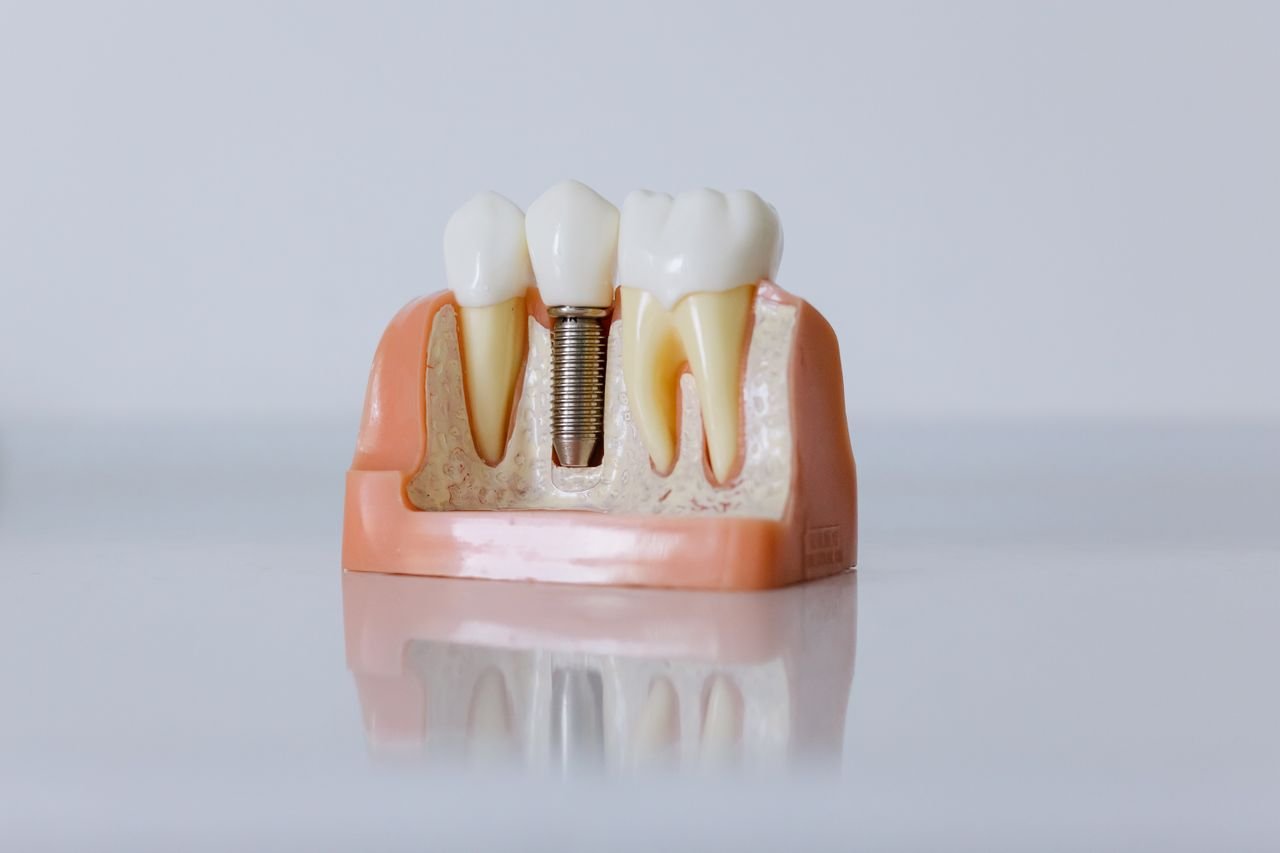
A dental implant is a small titanium or zirconia post placed in your jawbone to replace a missing tooth root. Once the bone bonds to it, usually over three to six months, it holds a custom crown, bridge or denture. With good care, the implant itself can last for decades.
Losing a tooth changes more than your smile. You chew differently, nearby teeth start to drift into the gap, and the jawbone underneath slowly shrinks. If you've been putting off a decision, our guide on what happens if you don't replace a missing tooth explains why timing matters.
Dental implants in Vancouver solve the problem at the root. Unlike a fixed bridge, an implant doesn't lean on the teeth beside it. Unlike a removable denture, it stays put when you eat, talk and laugh.
At Enhance Dental Centre, we place and restore implants right here in Kitsilano, starting with a CBCT scan and finishing with your final crown. Because planning, surgery and restoration all happen in one office at 2219 West Broadway, you won't be sent back and forth between clinics.
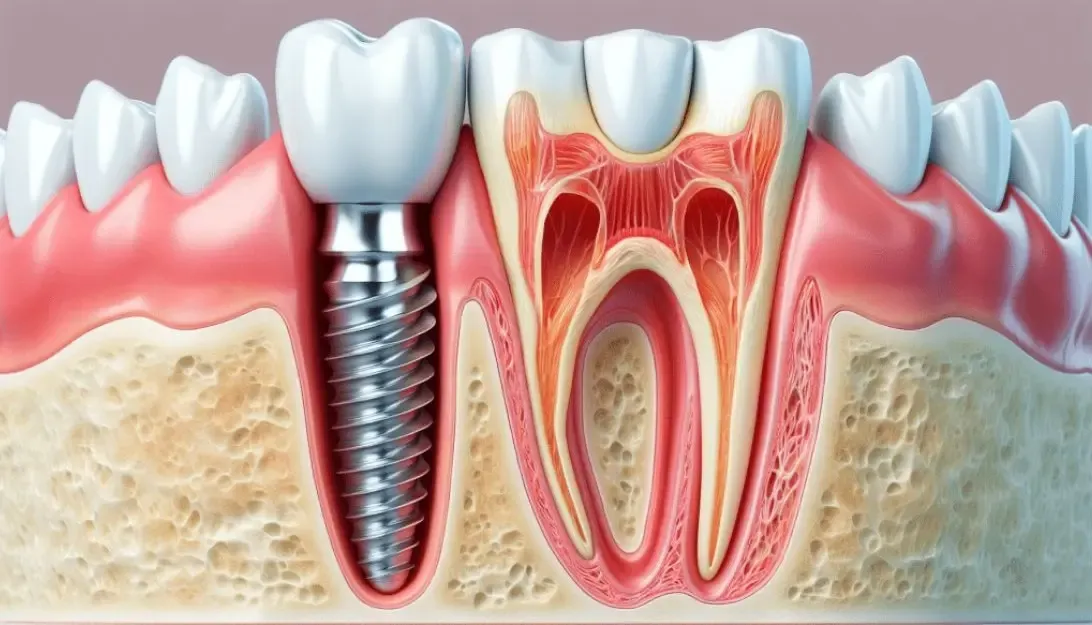
Every implant restoration has three parts that work together. Think of it as a natural tooth rebuilt from the ground up.
A screw-shaped post made of medical-grade titanium or zirconia sits in the jawbone where the root used to be. Bone grows tightly around its surface in a process called osseointegration.
A small connector attaches to the top of the post and rises just above the gumline. It holds your new tooth firmly in position.
Your visible new tooth is made from porcelain or zirconia and shaded to blend in with your other teeth. It's either cemented or screwed onto the abutment.
Because the post stimulates the bone the way a natural root does, implants help keep your jaw and face from losing shape over time. Bridges and dentures can't do that.
Most healthy adults who are missing one or more teeth can get implants. The two things that matter most are healthy gums and enough bone to hold the post, and we check both at your consultation with a 3D scan and a full gum exam.
Age on its own is rarely a barrier. Many patients in their 70s and 80s do very well with implants, especially when they're tired of loose dentures. Read more about dental implants for seniors.
Whether you're missing one tooth or all of them, there's an implant solution that fits. We'll recommend the option that gives you the most stable result with the fewest implants.
One post and one crown replace a single missing tooth, and the teeth on either side stay untouched. It's the closest thing to getting your natural tooth back. Learn more about the single tooth implant.
When several teeth in a row are missing, two implants can hold a bridge of three or more teeth. You get a fixed result with fewer posts than teeth, which keeps surgery simpler.
A denture that clips or screws onto four to six implants won't slip or rub. Many patients can eat foods they'd given up for years. Compare implant dentures with traditional dentures.
For people who've lost most or all of the teeth in one jaw, a full set of fixed teeth can be anchored on several implants. It never comes out at night, and it feels like a natural set of teeth.
Each option has its place. Here's how they compare on the points our patients ask about most.
| Feature | Dental implant | Fixed bridge | Removable denture |
|---|---|---|---|
| How it stays in place | Fused to the jawbone | Cemented to the teeth beside the gap | Rests on the gums, held by suction or clasps |
| Effect on nearby teeth | None, neighbours stay untouched | Healthy teeth are reshaped to hold crowns | Clasps can put pressure on remaining teeth |
| Effect on the jawbone | Helps preserve bone | Bone under the gap keeps shrinking | Bone keeps shrinking and the fit loosens |
| Typical lifespan | Post can last decades; crown 10 to 15+ years | About 10 to 15 years | About 5 to 10 years with relines |
| Eating and comfort | Bite and chew like a natural tooth | Strong, but food can trap underneath | Can slip with hard or sticky foods |
| Daily care | Brush and floss like your own teeth | Floss threaders needed under the bridge | Take out and clean every day |
| Treatment time | 3 to 9 months in most cases | 2 to 3 weeks | A few weeks |
Still weighing it up? Our articles on implants vs bridges and dentures vs implants go into more detail, and we also offer dentures and bridges if an implant isn't right for you.
Most implant cases take three to nine months from consultation to final crown. Most of that time is quiet healing, not appointments. Here's what each stage looks like with us.
We examine your mouth, review your health history and take a CBCT scan. It shows bone height, width and the position of nerves and sinuses, so we can plan the size and angle of each implant. You leave with a written plan and estimate.
If the damaged tooth is still there, we remove it gently during a tooth extraction. A bone graft is sometimes added at the same visit, and some cases allow the implant to go in that day.
Under local anaesthetic, the post is placed in the jawbone. A single implant usually takes about an hour. If you're nervous, tell us, and we'll talk through ways to keep you comfortable.
Over the next three to six months, the bone bonds to the implant. You can wear a temporary tooth during this time, so you're never left with a visible gap.
Once the implant is stable, we attach the abutment and take digital impressions for your custom crown.
Your crown is fitted, checked for bite and colour, and secured. From then on, you'll care for it like any other tooth.
For more detail on each stage, see our implant timeline and recovery guide.

Most people are surprised by how manageable implant surgery is, and many go back to work the next day. Expect some swelling, mild bruising and tenderness for two to four days. Over-the-counter pain relief is usually enough to stay comfortable.
The first week is about protecting the site while your gum heals. After that, you'll eat and brush normally around the area, while the bone keeps bonding to the implant in the background.
Call us at 604-210-3603 if bleeding won't stop, swelling gets worse after day three, or you develop a fever. These problems are uncommon, but it's always better to check early.
The cost depends on your case, so we don't quote a single price before we've seen you. After your consultation, you'll get a written estimate that covers every stage.
One implant for one tooth costs less than several implants supporting a bridge or a full arch.
Extractions, bone grafting or gum treatment before placement add to the total.
A single crown, an implant bridge and an implant denture each involve different lab work.
Titanium or zirconia posts, and porcelain or zirconia crowns, vary in cost and look.
Many insurance plans cover part of the crown, extraction or grafting, even when they don't cover the implant itself. We'll send a pre-estimate to your insurer and walk you through payment options on our insurance and finance page.
Patients covered by the Canadian Dental Care Plan (CDCP) are welcome, and we'll explain exactly what your plan does and doesn't cover. For a closer look at the numbers, read how much dental implants cost in Vancouver.
Thinking long term? Implants cost more upfront than a bridge or denture. Because the post can last decades and doesn't need regular replacing, many patients find it's the better value over a lifetime.
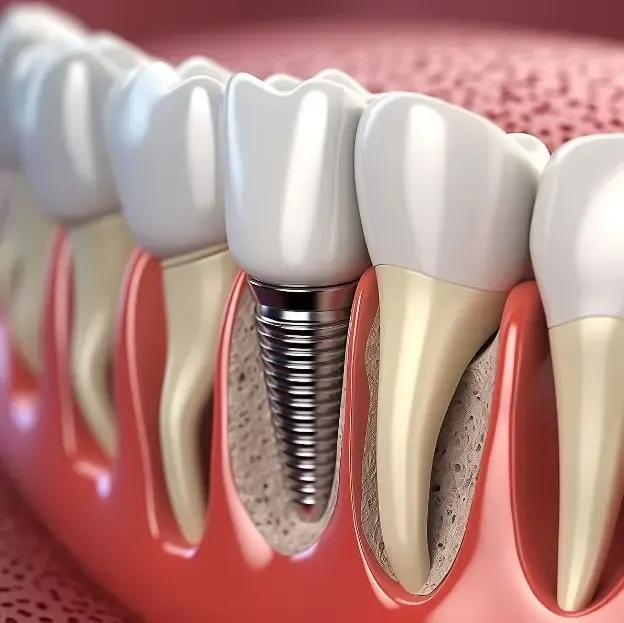
The implant post can last a lifetime with good care, and long-term studies report survival rates above 95 percent after ten years. The crown on top usually lasts 10 to 15 years or more, depending on how much wear it takes.
Implants can't get cavities, but the gum and bone around them can still get infected. This is called peri-implantitis, and it's the main reason implants fail. You can keep your implant healthy by:
To learn more, read how long dental implants last and why they fail.
Implant treatment is a big decision. Here's what you can expect when you trust it to our team in Kitsilano.
Our in-house CBCT scanner shows bone and nerves in three dimensions, so every implant is placed in the right spot at the right angle.
Extractions, bone grafting, gum treatment, implant placement and the final crown all happen at our West Broadway office.
We're open Monday to Friday, with evening appointments until 7 pm on Wednesdays and Thursdays.
We hold a 4.9-star rating from 319 Google reviews. You can see real results in our before and after gallery.
You'll get a written plan and cost estimate before treatment, with time to think it over and no pressure.
Our dentists are registered with the BC College of Oral Health Professionals, which took over dental regulation from the CDSBC in 2024.
The procedure is done under local anaesthetic, so you'll feel pressure but not pain. Afterward, most people describe soreness similar to having a tooth pulled, and it fades within a few days.
Most cases take three to nine months from start to finish. Simple cases with good bone sit at the shorter end, while cases that need an extraction or bone graft take longer.
Sometimes. If the bone and gum are healthy and there's no active infection, an immediate implant may be possible. We confirm this with a 3D scan before the extraction.
No. The crown is custom shaded and shaped to match your neighbouring teeth, and it comes out of the gum just like a natural tooth.
There's no upper age limit. What matters is your general health, your gums and your bone. Many people get implants in their 70s and 80s with excellent results.
It's uncommon, but it can happen. Smoking, uncontrolled diabetes, gum infection and heavy grinding raise the risk. Good home care and regular check-ups keep that risk low.
Coverage varies by plan. Some plans cover the implant, while others cover only the crown or related procedures. We'll check your benefits and send a pre-estimate before you commit.
Book an implant consultation at Enhance Dental Centre in Kitsilano. We'll take a 3D scan, answer every question and give you a clear plan, so you can decide with confidence.
Address: 2219 West Broadway, Vancouver, BC V6K 2E4
Phone: 604-210-3603 or 604-733-5229
Email: care@enhancedentalcentre.com
| Monday | 8:00 am to 5:00 pm |
| Tuesday | 8:00 am to 5:00 pm |
| Wednesday | 10:00 am to 7:00 pm |
| Thursday | 10:00 am to 7:00 pm |
| Friday | 8:00 am to 4:00 pm |