
In most cases, a root canal treatment is all that’s needed to save an infected tooth. But occasionally, infection persists at the root tip even after a root canal — and that’s where endodontic surgery comes in.
At Enhance Dental Centre, our team is trained to perform endodontic surgical procedures that go the extra mile to save teeth that might otherwise be lost. We use advanced imaging and microsurgical techniques to ensure precision and the best possible outcomes.
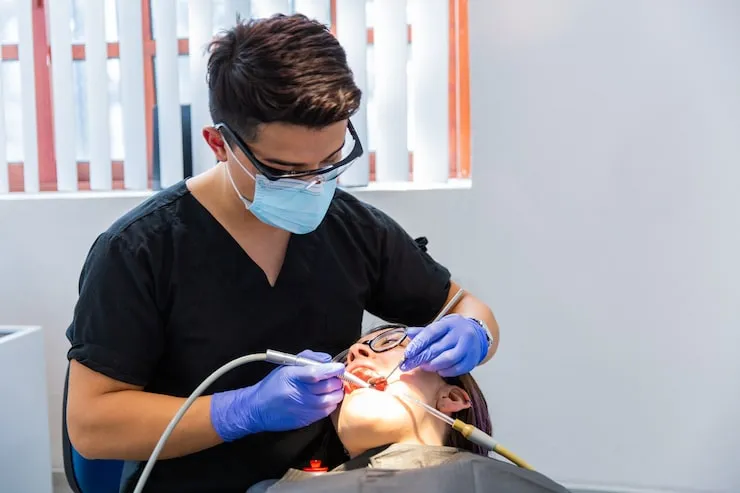
Endodontic surgery — most commonly an apicoectomy (root end surgery) — is a microsurgical procedure performed when:
During an apicoectomy, your dentist makes a small incision in the gum to access the root tip, removes the infected tissue and the very end of the root, and places a small filling to seal the root end. The gum is then sutured and healing begins.
The procedure is performed under local anaesthesia and most patients are surprised by how manageable it is.
Some swelling and discomfort are normal for a few days after the procedure. Most patients take 1–2 days off to rest and recover. You’ll be given detailed aftercare instructions and follow-up appointments to monitor healing.
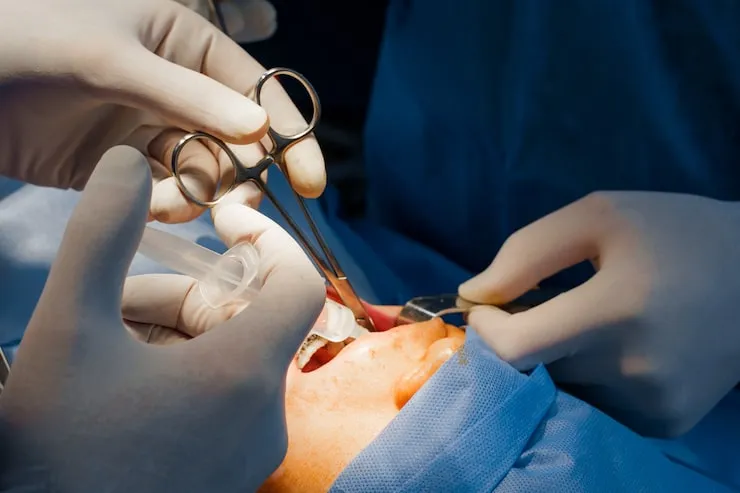
Saving your natural tooth is always our first priority. Your natural tooth’s root is anchored in bone in a way that implants mimic but can’t fully replicate. Preserving it maintains bone density, tooth position, and the structural integrity of your jaw.
A: They’re related but different. A root canal treats the inside of the tooth from the crown. Endodontic surgery addresses problems at the root tip from outside the tooth.
A: Your dentist will typically recommend it if infection persists after root canal treatment or if there’s pathology at the root tip visible on X-rays.
A: The area is fully numbed before treatment. Post-operative discomfort is normal but manageable with medication. Most patients describe the recovery as milder than expected.
A: When performed by a skilled practitioner with proper imaging, endodontic surgery has a high success rate — around 85–95% in suitable cases.
A: Initial healing occurs within 1–2 weeks. Complete bone healing may take several months, which we monitor with follow-up X-rays.
Most infected teeth are saved with a standard root canal. But when infection or inflammation persists at the root tip after treatment, endodontic surgery, most often an apicoectomy, can save the tooth without removing it.
Ongoing tenderness or dull pain in a tooth that already had a root canal can signal that infection remains at the root tip.
A bump or swelling near the gumline that keeps coming back, even after a root canal, often points to infection that non-surgical retreatment hasn't fully cleared.
Some teeth have curved, narrow, or calcified canals that are difficult to fully clean from inside the tooth, leaving surgery as the most direct path to the infected area.
In some cases a small fracture or crack at the very tip of the root is only accessible surgically.
The entire procedure usually takes between 30 and 90 minutes, depending on the tooth and its location, and is performed under local anesthesia in a single visit.
| Option | What it preserves | Typical recovery |
|---|---|---|
| Endodontic surgery (apicoectomy) | Your natural tooth and root structure | A few days of mild swelling and tenderness |
| Extraction + dental implant | Replaces the tooth entirely with an artificial root and crown | Several months, including healing time before the implant crown is placed |
| Extraction + fixed bridge | Replaces the missing tooth using neighbouring teeth as anchors | A few weeks for the surrounding gum tissue to settle |
Whenever a natural tooth can be reasonably saved, most dentists will recommend doing so, since no replacement fully matches the function and feel of your own tooth. Endodontic surgery is usually considered before more invasive options like extraction.
Most patients return to normal activities the next day, with some mild swelling or bruising around the treated area for a few days. Over-the-counter pain relief is usually sufficient for any discomfort. Sutures are typically removed about a week after surgery, and the surgical site continues healing internally over the following months, though you won't notice this day to day.
Endodontic surgery is often partially covered under major dental plans and may be eligible under the Canadian Dental Care Plan (CDCP) depending on your coverage tier. See our insurance and financing page for how we verify coverage and set up direct billing before your procedure.
Your dentist will typically take new imaging, sometimes including a CBCT scan, to get a precise 3D view of the root tip and surrounding bone before recommending surgery. This helps confirm exactly where the infection is and whether surgery, non-surgical retreatment, or extraction is the most appropriate path forward.
Good candidates for endodontic surgery generally have a tooth with enough healthy structure remaining, adequate bone support, and a localized infection at the root tip rather than a fracture running down the length of the root. If the tooth is too compromised to save, your dentist will discuss replacement options like a dental implant instead.
Once your endodontic surgery has healed, the treated tooth generally behaves just like any other restored tooth. It's still important to keep up with regular checkups so your dentist can monitor the area on X-rays over time and confirm the infection hasn't returned. Good oral hygiene, including gentle brushing around the surgical site in the first week, helps the gum tissue heal cleanly.
The procedure itself is performed under local anesthesia, so you shouldn't feel pain during surgery. Mild soreness for a few days afterward is normal and usually manageable with over-the-counter pain relief.
Apicoectomies have a high success rate when performed on a tooth with adequate remaining structure and a localized infection, often allowing patients to keep their natural tooth long-term.
It's uncommon, but if infection returns despite surgery, your dentist will reassess whether further treatment or extraction and replacement is the better long-term option.
Most patients return to a normal diet within a few days, though it's best to avoid chewing directly on the treated side and stick to softer foods until any swelling subsides.
Most people return to normal activities, including work or school, the next day. Strenuous exercise is usually best avoided for a few days.
Book a consultation at our Kitsilano clinic so we can evaluate whether endodontic surgery can save your tooth.
Related services: Endodontics / Root Canals · Oral Surgery · Dental Implants · Emergency Dental Care · Insurance & Financing
We use cookies to improve your experience on our site. By using our site, you consent to cookies.
Manage your cookie preferences below:
Essential cookies enable basic functions and are necessary for the proper function of the website.