
Your questions, answered · Enhance Dental Centre · 9 min read
Veneers are safe for healthy teeth when they’re planned and placed properly, but they do have trade-offs. Traditional porcelain veneers require removing a thin layer of enamel, usually about 0.3 to 0.7 mm, and that enamel doesn’t grow back. That makes veneers a long-term commitment, so the real question is whether they’re the right choice for your specific teeth.
For many people, they’re a great fit. For others, a more conservative option gives a similar look with less change to the tooth. Composite bonding can fix small chips and gaps without removing enamel at all.
If your main concern is colour, professional Philips Zoom whitening may give you the brighter smile you want while leaving your teeth untouched.
And if your teeth are crooked or crowded, straightening them first with Invisalign can mean thinner veneers or no veneers at all. A consultation at a trusted dental clinic in Kitsilano helps you weigh these options before anything is changed.
Quick answer
Veneers aren’t harmful when they’re the right treatment. Porcelain veneers are strong, stain-resistant, and can last 10 to 20 years. The trade-off is that enamel is removed, so the tooth will always need a veneer or crown. Risks rise with grinding, gum disease, untreated decay, or over-preparation of the teeth.
01What are veneers?
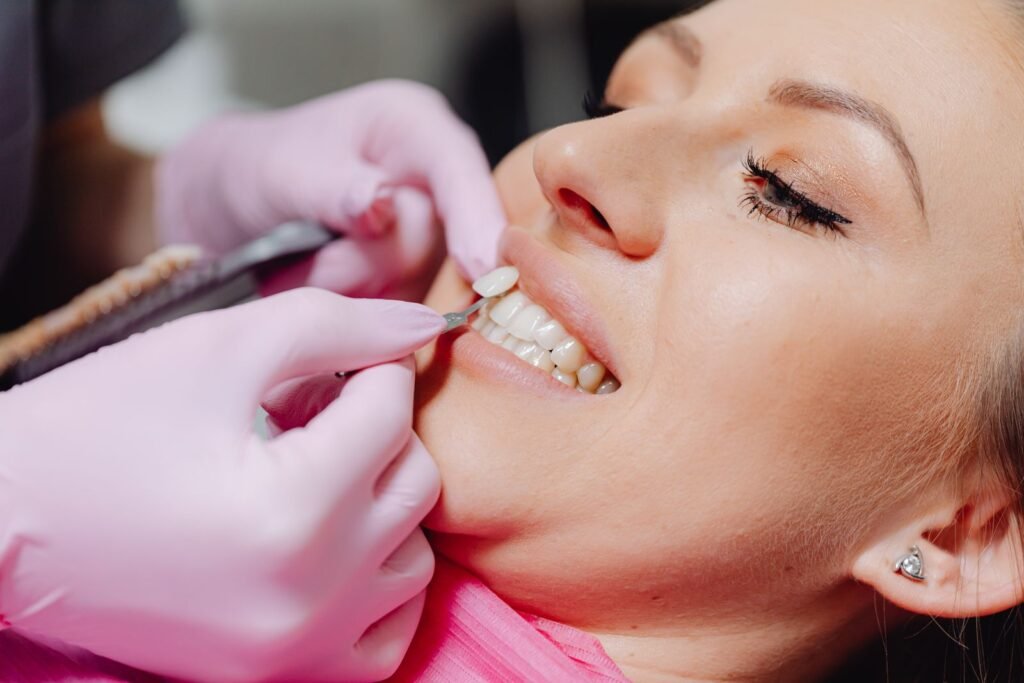
Veneers are thin shells bonded to the front surface of teeth. They change the shape, colour, size, or length of teeth.
There are two main types:
- Porcelain veneers are made in a dental lab (or with in-office milling). They’re very strong, natural-looking, and resist staining.
- Composite veneers are made of tooth-coloured resin, shaped directly on the tooth. They’re faster and usually need little or no enamel removal, but they stain and chip more easily.
No-prep and minimal-prep veneers
Some veneers need very little or no enamel removal. These work best when teeth are small, worn, or set back slightly. They aren’t right for everyone, since adding thickness without removing any can make teeth look bulky.
02How veneers can affect your natural teeth
Here’s a balanced look at what veneers can and can’t do to your teeth.
The real downsides
- Enamel removal is permanent. The tooth will always need a covering.
- Sensitivity. Some people feel sensitivity to hot and cold for a few weeks after placement.
- Decay at the edges. The tooth under a veneer can still decay where the veneer meets the tooth, especially near the gum.
- Chips and cracks. Porcelain is strong, but biting nails, pens, or ice can break it.
- Replacement. Veneers don’t last forever. Each replacement may require a little more tooth adjustment.
The real benefits
- Strength. Bonded porcelain veneers add strength to the front surface of the tooth.
- Stain resistance. Porcelain stays bright for years.
- Conservative compared to crowns. A veneer removes far less tooth structure than a full crown.
- Natural look. Well-made veneers reflect light like real enamel.
03How much enamel is actually removed?
This is the question most people really want answered. For traditional porcelain veneers, dentists typically remove about 0.3 to 0.7 mm from the front of the tooth. That’s roughly the thickness of a credit card or two.
For comparison, a full crown usually removes 1.5 to 2 mm all the way around the tooth. So veneers are much more conservative than crowns.
The amount depends on:
- Your starting tooth position. Teeth that stick out may need more reduction. Teeth set back may need almost none.
- The colour change you want. Covering very dark stains needs a bit more thickness.
- The material. Thin, high-strength porcelains allow less reduction.
A digital smile design and mock-up help your dentist remove only what’s needed.
04Questions to ask at a veneer consultation
Bring these to your appointment:
- How much enamel will you remove from each tooth?
- Am I a candidate for minimal-prep veneers or bonding instead?
- Will I see a preview of the final shape and shade?
- Do I have any gum, decay, or bite issues to fix first?
- Do I need a night guard?
- What happens if a veneer chips or comes off?
- How long should I expect these veneers to last?
Clear answers to these questions are a good sign you’re in the right hands.
05When are veneers a good idea?
Veneers tend to work well for people with:
- Chipped, worn, or uneven front teeth
- Stains that don’t respond to whitening, like tetracycline staining
- Small gaps between front teeth
- Teeth that are misshapen or unusually small
- Old, discoloured bonding that needs replacing
06When are veneers a bad idea?
Veneers may not be the right choice if you have:
- Active gum disease. Gums need to be healthy first.
- Untreated decay. Cavities need to be fixed before cosmetic work.
- Heavy grinding or clenching without a night guard plan. Grinding can crack or pop off veneers.
- Severe crowding or bite problems. Orthodontics may be a better first step.
- Very thin enamel. Veneers bond best to enamel. Bonding mostly to dentin can be less reliable.
07Veneers vs bonding vs whitening vs Invisalign
Each option solves a different problem. Often the best result combines two, like Invisalign first and then a few veneers, or whitening first and bonding to match.
08What the veneer process looks like
Here’s a typical path for porcelain veneers:
- Consultation. Talk about your goals, take photos and scans, and check your teeth and gums.
- Smile planning. A digital design or wax-up shows how the new teeth will look.
- Mock-up. You may get to “try on” the new shape with temporary material.
- Preparation. The teeth are numbed, and a thin layer of enamel is gently removed.
- Temporaries. You wear temporary veneers while the lab makes the final ones.
- Bonding. The final veneers are checked for fit and colour, then bonded in place.
- Follow-up. Your bite is checked and adjusted. A night guard may be made if you grind.
09Myths about veneers
Myth: Veneers ruin your teeth.
Fact: Properly planned veneers remove a minimal amount of enamel. Over-preparation is the problem, and careful planning avoids it.
Myth: Veneers look fake.
Fact: Bulky, overly white veneers look fake. Well-designed veneers match your face, skin tone, and neighbouring teeth.
Myth: Teeth rot under veneers.
Fact: Teeth under veneers decay only if plaque is left at the edges. Daily brushing and flossing protect them.
Myth: Once you have veneers, you never need the dentist for those teeth.
Fact: Veneered teeth still need checkups, cleanings, and X-rays like any other teeth.
10Common mistakes people make with veneers
- Choosing a shade that’s too white. Ultra-bright teeth can look unnatural. Aim for a shade that suits your face.
- Skipping the night guard. If you grind, a night guard protects your investment.
- Going too fast. Rushing past gum treatment or orthodontics can lead to problems later.
- Choosing based on price alone. Cheap veneers from unlicensed providers or abroad can come with poor fit, gum problems, and painful fixes.
- Using teeth as tools. Opening packages or biting nails can chip porcelain.
Safety note
Be cautious with “veneer tourism” or very fast, very cheap offers. Over-prepared teeth, poor-fitting edges, and untreated decay under veneers are common problems dentists see afterward. Make sure your dentist is licensed with the College of Dental Surgeons of British Columbia (CDSBC) and explains exactly how much tooth will be removed.
11Real patient scenarios
The chip fix. A patient has one chipped front tooth from a cycling fall on the seawall. Instead of veneers, the dentist recommends bonding. It’s done in one visit with no enamel removed, and it blends right in.
The full smile. Another patient has worn, yellowed front teeth from years of grinding and old fillings. After a night guard and gum check, they get 6 porcelain veneers. The result looks natural, and the night guard keeps the veneers safe.
The straighten-first plan. A third patient wants veneers to hide crowding. The dentist suggests 6 months of Invisalign first. Once the teeth line up, only 2 teeth need veneers, and much less enamel is removed.
12What it’s like to live with veneers
Once they’re bonded, most people forget they have veneers within a couple of weeks. You eat, talk, and smile normally. The first few days can feel a little different, since the tongue notices the new shape, but that settles quickly.
A few practical notes from daily life:
- Coffee and tea won’t stain porcelain, but they can stain the bonding cement at the edges over time
- Sticky or very hard foods are fine in moderation, though cutting apples and crusty bread into smaller pieces helps
- A gentle, non-abrasive toothpaste keeps the porcelain glaze looking glossy
- Regular cleanings let your hygienist polish the edges and check that the bond is still tight
If something ever feels rough, loose, or different when you bite, book a quick check. Small chips can often be smoothed or repaired before they turn into a bigger problem.
13How to care for veneers
- Brush twice a day with a soft brush and non-abrasive toothpaste
- Floss daily, paying attention to the veneer edges
- Wear a night guard if you clench or grind
- Avoid biting ice, pens, and fingernails
- Keep up with cleanings and checkups
- Rinse with water after coffee, tea, or red wine to protect any natural teeth nearby
14Finding the best dentist in Vancouver for veneers
When you’re choosing the best dentist in Vancouver for cosmetic work, look for someone who talks you through alternatives, shows you a preview, and won’t rush the process.
Enhance Dental Centre is one of the best and most trusted dental clinics in Kitsilano and Vancouver, with a 5.0 Google rating from over 270 patient reviews. The team welcomes new patients and accepts CDCP patients, and offers a full range of preventive, restorative, and cosmetic care in one place.
The clinic is located at 2219 West Broadway, Vancouver, BC V6K 2E4, a short trip for anyone in Kitsilano, Point Grey, or Fairview. Hours are Monday to Tuesday 8:00 AM to 5:00 PM, Wednesday to Thursday 10:00 AM to 7:00 PM, and Friday 8:00 AM to 4:00 PM, so evening consultations are possible midweek.
New patients can call 604-210-3603, and existing patients 604-733-1022. If you’d like to send photos or questions first, email care@enhancedentalcentre.com.
All dentists are licensed with the College of Dental Surgeons of British Columbia (CDSBC), so cosmetic treatment follows the same safety and consent standards as all other dental care in BC.
15Frequently asked questions
Do veneers damage your teeth permanently?
Traditional veneers remove a thin layer of enamel, which is permanent. The tooth stays healthy underneath, but it will always need a veneer or crown. Minimal-prep and composite options remove little or no enamel.
How long do porcelain veneers last?
With good care, porcelain veneers usually last 10 to 20 years. Grinding, biting hard objects, and gum recession can shorten their lifespan.
Can you get cavities under veneers?
The veneer can’t decay, but the tooth underneath can, mainly at the edges near the gum. Brushing, flossing, and regular checkups prevent this.
Are veneers painful to get?
The teeth are numbed during preparation, so the procedure itself shouldn’t hurt. Some people feel mild sensitivity or gum tenderness for a few days afterward.
Can veneers be removed?
Porcelain veneers can be removed, but since enamel was taken off, the tooth will need a new veneer, bonding, or a crown. Composite veneers are easier to remove or redo.
16Conclusion
Veneers are safe and long-lasting when they’re the right treatment for healthy teeth.
The main trade-off is permanent enamel removal, so it’s worth comparing bonding, whitening, and Invisalign first.
A careful consultation helps you pick the option that gives the look you want with the least change to your teeth.