
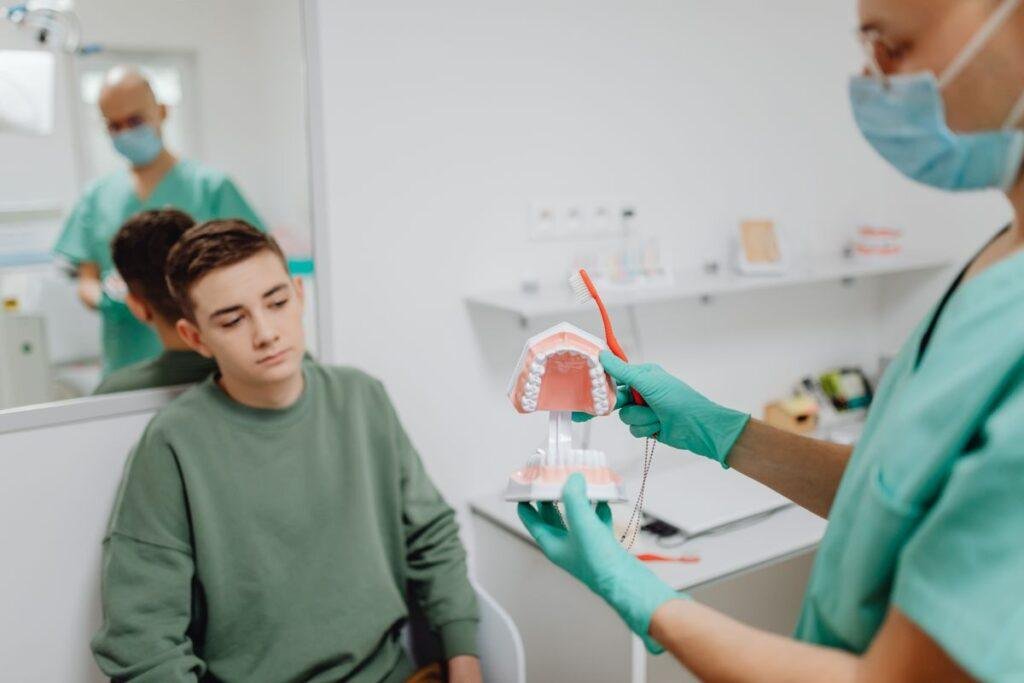
Smoking and vaping both harm oral health, and the damage begins long before it becomes visible. Staining and bad breath are the cosmetic effects most people notice first, while gum disease, delayed healing and implant failure are the serious ones. These changes are common and largely reversible in their early stages, and a full assessment at Enhance Dental Centre establishes exactly where you stand.
Nicotine constricts blood vessels in the gums, which masks bleeding and makes disease progress silently. That is why smokers often present with advanced problems despite few symptoms, and why regular periodontal treatment is so important for this group.
Soft tissue changes also need monitoring, so oral cancer screening is included at every examination.
Once habits change, stains can be addressed with supervised Philips Zoom whitening, and missing teeth can be replaced with dental implants, although smoking status directly affects implant success and is always discussed first.
How Tobacco Affects the Mouth
Reduced Blood Flow
Nicotine narrows the small vessels supplying gum tissue. Less oxygen and fewer immune cells reach the area, so infection is fought less effectively and healing slows.
Altered Bacterial Balance
Smoking shifts the oral microbiome toward more aggressive anaerobic species associated with periodontal breakdown.
Suppressed Bleeding
Because vessels are constricted, gums bleed less. This removes the earliest warning sign patients rely on and delays diagnosis.
Impaired Healing
Extraction sockets, surgical sites and implant osseointegration all heal more slowly. Dry socket risk after extraction is several times higher in smokers.
Staining and Odour
Tar and nicotine penetrate enamel microporosities, producing yellow-brown discolouration that surface brushing cannot remove.
Vaping and Oral Health
Vaping is frequently promoted as a safer alternative, and while it avoids combustion products, it is not harmless to the mouth. Documented and emerging effects include:
- Dry mouth: Propylene glycol and glycerin are hygroscopic and reduce salivary moisture, raising cavity risk.
- Nicotine effects: Vessel constriction and impaired healing occur regardless of delivery method.
- Gum inflammation: Studies report increased inflammatory markers and altered microbiome composition in vapers.
- Sweetened aerosols: Flavoured liquids contain sugars and acids that contribute to enamel demineralisation.
- Tissue irritation: Heat and chemical exposure can cause palatal changes and sore areas.
Long-term data remains limited, so it would be inaccurate to claim definitive conclusions about cancer risk. What is established is that vaping is not neutral for gums and teeth.
Comparison Summary
- Cigarettes: Highest risk for periodontal disease, oral cancer, staining and implant failure.
- Vaping: Lower combustion exposure, but confirmed dry mouth, gum inflammation and nicotine effects on healing.
- Smokeless tobacco: High risk of localised gum recession, leukoplakia and lesions where the product is held.
- Cannabis smoking: Associated with dry mouth, gum inflammation and increased decay.
- Complete cessation: Measurable improvement in gum health within weeks and progressive risk reduction over years.
What Improves When You Stop
- Within forty-eight hours: Taste and smell begin to recover.
- Within one week: Breath improves and saliva flow starts normalising.
- Within two to four weeks: Gum blood flow improves, and bleeding may temporarily increase as circulation returns. This is a sign of recovery, not deterioration.
- Within three months: Response to periodontal treatment improves significantly.
- Within one year: Healing after extractions and surgery approaches that of non-smokers.
- Over five to ten years: Risk of oral cancer and periodontal progression falls substantially.
Patient Scenarios
Scenario One
A patient who has smoked for twenty years attends with no bleeding gums but noticeable bad breath. Charting reveals deep pockets and bone loss on radiographs. Periodontal therapy begins alongside a cessation discussion, because treatment outcomes are markedly better in patients who quit.
Scenario Two
A younger patient who switched from cigarettes to vaping presents with multiple new cavities near the gumline. Dry mouth from vaping is identified as the driver, and a prevention plan with high-fluoride products and saliva support is put in place.
Scenario Three
A patient requesting implants is advised that smoking increases the risk of early failure and peri-implantitis. A staged plan with cessation support before surgery is agreed to improve the odds of long-term success.
Common Mistakes
- Assuming vaping carries no oral health consequences
- Believing that absence of bleeding means healthy gums
- Using whitening products to mask staining without treating underlying gum disease
- Resuming smoking immediately after an extraction, which sharply raises dry socket risk
- Relying on mints and mouthwash instead of addressing the cause of odour
- Delaying dental visits out of embarrassment about staining
Practical Protection Steps
- Attend hygiene appointments every three to four months rather than every six
- Use a fluoride toothpaste and consider a prescription-strength formulation
- Clean between teeth daily without exception
- Rinse with water and use sugar-free xylitol gum to counter dryness
- Avoid alcohol-based mouthwashes that increase drying
- Report any sore, patch or lump lasting longer than three weeks
- Ask about cessation support programmes available through your physician or pharmacist
Myths Worth Correcting
Myth: Only Heavy Smokers Develop Gum Disease
Even light or occasional smoking measurably increases periodontal risk and slows healing.
Myth: Whitening Toothpaste Removes Tobacco Stains
Abrasive pastes remove only superficial film. Deeper staining requires professional cleaning and whitening.
Myth: Quitting Late Makes No Difference
Improvement in gum health and healing capacity begins within weeks at any age and after any duration of use.
Myth: Bleeding After Quitting Means Something Is Wrong
Returning blood flow unmasks inflammation that was already present. It typically settles with treatment and good home care.
Supportive Dental Care in Kitsilano
Enhance Dental Centre is one of the most trusted dental clinics in Kitsilano and Vancouver, holding a 5.0 Google rating from more than 270 patient reviews and offering preventive, restorative, cosmetic and specialised care under one roof at 2219 West Broadway, Vancouver, BC V6K 2E4. The practice is accepting new patients and CDCP patients.
Hours are Monday and Tuesday 8:00 AM to 5:00 PM, Wednesday and Thursday 10:00 AM to 7:00 PM, and Friday 8:00 AM to 4:00 PM, with evening availability midweek. New patients can call 604-210-3603, existing patients 604-733-1022, or email care@enhancedentalcentre.com to arrange an appointment without judgment about smoking or vaping history.
Every clinician is a licensed dental professional registered with the College of Dental Surgeons of British Columbia. Dental advice supports but does not replace guidance from your physician regarding nicotine cessation and general health.
Frequently Asked Questions
Is vaping better for my teeth than smoking?
It avoids tar and combustion products, so staining is usually less severe, but nicotine still restricts blood flow and vaping causes dry mouth and gum inflammation. Neither option is safe for oral tissues.
How long after quitting will my gums improve?
Blood flow improves within two to four weeks, and response to periodontal treatment improves noticeably within three months. Existing bone loss does not reverse, but progression can be halted.
Can I still get dental implants if I smoke?
Implants are possible but carry a higher risk of early failure and peri-implantitis. Most clinicians recommend stopping before surgery and for the healing period afterwards to improve long-term success.
Why do my gums bleed more after I stopped smoking?
Nicotine was constricting the blood vessels and hiding existing inflammation. Restored circulation reveals the true condition of the gums, which then responds well to professional cleaning and daily care.
Will whitening work on smoker stains?
Professional cleaning removes most surface staining, and supervised whitening addresses the deeper discolouration. Results last considerably longer if tobacco use has stopped, since new staining accumulates quickly otherwise.
Conclusion
Smoking and vaping both damage gums, slow healing and raise long-term dental risk. Quitting produces measurable improvement within weeks, and shorter recall intervals limit damage in the meantime. Discuss your habits openly with your dental team so care can be tailored honestly and effectively.