
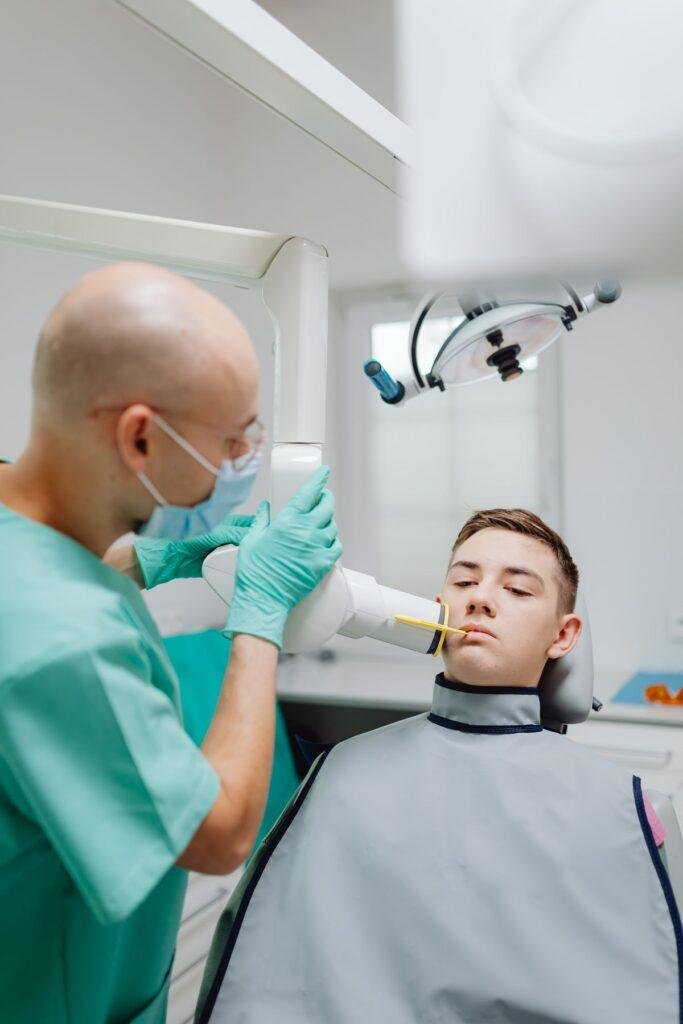
An oral cancer screening is a short, painless examination of the soft tissues of your mouth, throat and neck, and it is included in every routine checkup at a full-service dental clinic in Kitsilano. Most findings are entirely benign, such as ulcers or irritation from a sharp tooth. The reason screening matters is simple: when oral cancer is detected early, treatment outcomes are far better, and early lesions are usually painless.
Many patients assume this only applies to heavy smokers. That is no longer accurate. Rates in younger, non-smoking adults have risen, largely linked to human papillomavirus. Regular attendance for preventive dental hygiene is the most practical way to make sure your soft tissues are checked consistently.
A dedicated oral cancer screening takes only a few minutes and requires no preparation from you.
Chronic gum inflammation and poor oral hygiene are recognised risk contributors, so timely periodontal treatment supports overall tissue health. You can read more about the clinical approach on the dentist and practice page, and location details are listed on Google Maps.
What Is Oral Cancer?
Oral cancer refers to malignancies arising in the lips, tongue, floor of the mouth, cheeks, hard and soft palate, gums and the oropharynx at the back of the throat. The most common type by a wide margin is squamous cell carcinoma, which originates in the flat cells lining these surfaces.
Because these tissues are directly visible and accessible, oral cancer is one of the few cancers that can be screened for during a routine appointment without imaging or laboratory tests.
Who Is at Risk?
- Tobacco use: Smoking, chewing tobacco and snuff remain the strongest modifiable risk factors.
- Alcohol: Heavy consumption multiplies risk, particularly in combination with tobacco.
- HPV infection: Certain strains are associated with oropharyngeal cancers in younger adults.
- Sun exposure: Chronic ultraviolet exposure raises lip cancer risk.
- Age: Incidence increases after forty, although younger cases occur.
- Previous diagnosis: A history of head and neck cancer increases the chance of a second primary lesion.
- Chronic irritation: Long-term trauma from ill-fitting dentures or broken teeth.
- Weakened immune system from medication or medical conditions.
Around a quarter of cases occur in people with none of the classic risk factors, which is why screening is offered to all adult patients rather than only high-risk groups.
Signs and Symptoms to Watch For
- A sore or ulcer that does not heal within three weeks
- A red patch, a white patch, or a mixed red and white area
- A lump or thickening in the cheek, lip, tongue or neck
- Persistent hoarseness or a change in voice
- Difficulty or pain when swallowing or chewing
- Numbness in the tongue, lip or other area of the mouth
- Unexplained bleeding from the mouth
- Loose teeth with no obvious dental cause
- A denture that suddenly stops fitting properly
- Persistent ear pain on one side with no ear infection
Most of these have benign explanations. The important rule is duration: anything persisting beyond three weeks should be professionally examined.
What Happens During the Screening
- History review. Tobacco and alcohol use, family history, HPV vaccination status and any symptoms you have noticed.
- Extraoral examination. The face, jawline, lips and neck are inspected and the lymph nodes are palpated for enlargement or asymmetry.
- Intraoral inspection. Lips, cheeks, gums, hard and soft palate, tonsillar region and the back of the throat are examined under good lighting.
- Tongue examination. The tongue is gently held with gauze and moved so the sides and underside can be seen, as these are common sites.
- Floor of mouth palpation. A gloved finger checks for firmness or lumps beneath the tongue.
- Documentation. Any findings are recorded with measurements and, where appropriate, photographs for comparison at the next visit.
- Follow-up plan. Benign-appearing lesions are reviewed after two weeks. Anything persistent or suspicious is referred for specialist assessment or biopsy.
The whole process usually takes under five minutes and involves no discomfort.
Patient Scenarios
Scenario One
A patient in their thirties notices a white patch on the inside of the cheek. Examination reveals it corresponds exactly to a sharp edge on a broken filling. The filling is repaired and the patch resolves within two weeks. Cause identified, no further action needed.
Scenario Two
A long-term smoker attends for a routine cleaning with no complaints. A small red patch is noted on the floor of the mouth. It has not changed after a two-week review, so a referral for biopsy is arranged as a precaution. Early referral is standard practice, not a prediction of the result.
Scenario Three
A denture wearer reports a sore area that keeps returning. Adjustment of the denture flange removes the source of chronic irritation, and the tissue heals normally.
Common Mistakes Patients Make
- Waiting to see if a sore resolves for months rather than weeks
- Assuming that painless means harmless
- Only attending the dentist when something hurts, which means soft tissue is never routinely examined
- Self-treating persistent ulcers with over-the-counter gels indefinitely
- Believing that non-smokers cannot develop oral cancer
- Skipping appointments after switching to full dentures
Myths and Facts
Myth: Oral Cancer Always Hurts
Early lesions are frequently painless, which is precisely why visual screening is valuable.
Myth: Only Older Men Get Oral Cancer
The demographic has broadened considerably, with HPV-associated cases appearing in younger adults of both sexes.
Myth: A Screening Device Gives a Diagnosis
Adjunctive light-based devices assist visualisation but do not diagnose. Only biopsy and histopathology provide a definitive answer.
Myth: If You Have Dentures, Screening Is Unnecessary
Soft tissue risk is unrelated to the presence of natural teeth, and denture wearers face additional chronic irritation risk.
Prevention and Risk Reduction
- Stop using tobacco in every form, including vaping products
- Keep alcohol consumption within recommended limits
- Use lip balm with sun protection when outdoors
- Discuss HPV vaccination with your physician where age appropriate
- Eat a diet rich in fruit and vegetables
- Repair broken teeth and ill-fitting dentures promptly
- Perform a monthly self-check in front of a mirror
- Attend regular dental examinations so changes are noticed early
Trusted Dental Care in Kitsilano
Enhance Dental Centre is recognised as one of the most trusted dental clinics in Kitsilano and Vancouver, holding a 5.0 Google rating from more than 270 patient reviews. The practice at 2219 West Broadway, Vancouver, BC V6K 2E4 provides preventive, restorative, cosmetic and specialised care in one location, and is accepting new patients as well as CDCP patients.
Clinic hours are Monday and Tuesday from 8:00 AM to 5:00 PM, Wednesday and Thursday from 10:00 AM to 7:00 PM, and Friday from 8:00 AM to 4:00 PM, with midweek evening appointments available for patients who cannot attend during the working day. New patients can call 604-210-3603, existing patients can call 604-733-1022, and the team can be reached by email at care@enhancedentalcentre.com.
All treatment is provided by licensed dental professionals registered with the College of Dental Surgeons of British Columbia, which sets standards for training, infection prevention and patient safety. This article provides general information and does not replace an individual clinical examination or medical diagnosis.
Frequently Asked Questions
How often should I have an oral cancer screening?
At every routine dental examination, which for most adults means twice a year. Patients with significant risk factors may be reviewed more frequently at their dentist discretion.
Does the screening hurt or require special preparation?
No. It is a visual and tactile examination requiring no anaesthetic, no imaging and no preparation. Removable appliances are taken out so all tissue surfaces can be seen.
What happens if something suspicious is found?
The area is documented and usually reviewed after two weeks to see whether it resolves. Persistent lesions are referred for specialist assessment and biopsy. Referral is a precaution and most biopsies return benign results.
Can I check my own mouth at home?
Yes, and a monthly self-examination is worthwhile. Use a bright light and mirror to inspect your lips, cheeks, gums, tongue surfaces and the floor of your mouth, and feel your neck for lumps. Report anything lasting beyond three weeks.
Does vaping carry oral cancer risk?
Long-term data is still developing, so definitive conclusions cannot yet be drawn. Vaping is known to cause dry mouth, gum inflammation and tissue irritation, and avoiding it is the prudent choice for oral health.
Conclusion
Oral cancer screening is quick, painless and part of every thorough dental examination. Early detection dramatically improves outcomes, and most suspicious findings turn out to be harmless. Report any sore, patch or lump that lasts longer than three weeks rather than waiting for it to hurt.