
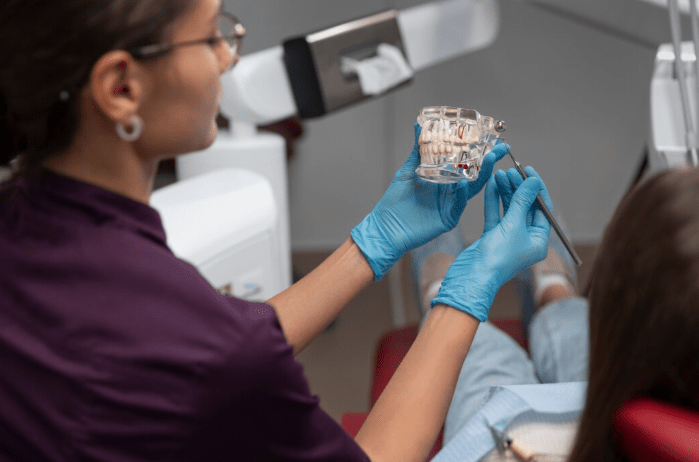
Invisalign treatment works by using a series of custom-made, clear plastic aligners that gradually shift your teeth into their correct positions over time. Each aligner is worn for about one to two weeks before being replaced with the next in the series, and the entire process is overseen by a licensed dental professional. If you are considering straighter teeth without traditional metal braces, Invisalign offers a discreet and comfortable path forward.
If you are looking for a trusted Dental Clinic in Kitsilano, Vancouver, to begin your Invisalign journey, getting a proper consultation is the very first step toward achieving the smile you want.
What Is Invisalign?
Invisalign is an orthodontic system developed by Align Technology that replaces conventional wire-and-bracket braces with a sequence of transparent, removable aligners. Each aligner is fabricated from a smooth, BPA-free thermoplastic material called SmartTrack, which is designed to fit snugly over your teeth. The aligners apply gentle, controlled pressure to specific teeth at each stage of treatment, moving them incrementally toward the final prescribed position.
Unlike fixed braces, Invisalign aligners can be removed for eating, drinking, brushing, and flossing, which makes maintaining oral hygiene significantly easier throughout treatment.
Signs That You May Need Invisalign
Not everyone is an ideal candidate from the start, but many common orthodontic concerns are treatable with Invisalign. You may benefit from this treatment if you notice any of the following:
- Crowded teeth that overlap or press against each other
- Gaps or spaces between teeth
- An overbite, where the upper front teeth extend too far over the lower teeth
- An underbite, where the lower teeth sit in front of the upper teeth
- A crossbite, where upper and lower teeth do not align properly
- An open bite, where upper and lower teeth do not meet when the mouth is closed
- Mild to moderate misalignment that affects your confidence or ability to clean your teeth
A qualified dentist or orthodontist will assess your specific case to determine whether Invisalign is the right option for you, or whether a more complex treatment is needed.
Step-by-Step: How the Invisalign Process Works
Understanding each phase of the process helps set realistic expectations and prepares you for what lies ahead.
Step 1: Initial Consultation
The process begins with a thorough consultation at a dental office. During this appointment, the dentist examines your teeth, reviews your dental and medical history, and discusses your smile goals. X-rays and photographs may also be taken at this stage.
This is the moment where your dentist determines whether Invisalign is suitable for your case. Some patients with severe bite problems or significant bone issues may require alternative treatments or a combination approach.
Step 2: Digital Scanning and Treatment Planning
If you are deemed a suitable candidate, the dentist takes a precise 3D digital scan of your teeth using an intraoral scanner. This eliminates the need for traditional putty impressions, which many patients find uncomfortable.
The scan data is uploaded to the Invisalign software platform, called ClinCheck, which generates a detailed digital model of your teeth. Using this model, the dentist maps out the exact movements your teeth will make at each stage of treatment and creates a virtual preview showing your projected final result.
At Enhance Dental Centre, located at 2219 W Broadway, Vancouver, BC V6K 2E4, the team uses advanced scanning technology to create precise treatment plans that are tailored to each patient’s unique dental structure.
Step 3: Custom Aligner Fabrication
Once the treatment plan is approved, the data is sent to an Align Technology facility where your custom aligner series is manufactured. Each aligner is trimmed and polished to ensure a smooth, comfortable fit.
Depending on the complexity of your case, your full set of aligners may consist of anywhere from ten to forty or more trays. The total number is determined by how much movement your teeth require.
Step 4: Receiving Your Aligners and Fitting Attachments
When your aligners are ready, you return to the dental office to receive your first set and begin treatment. At this appointment, the dentist may also attach small tooth-coloured bumps called attachments to certain teeth. These attachments act as handles that help the aligners grip the teeth more effectively, enabling more complex movements.
In some cases, your dentist may also place small rubber bands or other auxiliary components to address bite issues. These additions are part of the planned treatment and do not compromise the discreet appearance of the aligners.
Step 5: Wearing Your Aligners Daily
For Invisalign to work effectively, you must wear your aligners for 20 to 22 hours per day. The only times you should remove them are when eating, drinking anything other than water, and performing oral hygiene.
Each aligner set is typically worn for one to two weeks before progressing to the next. The transition between aligners produces a sensation of mild pressure, which indicates that the teeth are being moved as planned. This pressure usually subsides within a day or two of switching to a new tray.
If you are curious about what treatment involves day to day, you can learn more by visiting Dental Care in Kitsilano, Vancouver for detailed information on the process.
Step 6: Regular Progress Check-Ups
Throughout your treatment, you will attend regular check-up appointments with your dentist, usually every six to ten weeks. These visits allow the dentist to monitor your progress, make any necessary adjustments, and provide you with your next set of aligners.
These appointments are brief compared to traditional orthodontic adjustments but are essential for keeping your treatment on track and catching any issues early.
Step 7: Refinements If Needed
In some cases, after completing the initial aligner series, your teeth may not be in the exact final position that was planned. This is normal and is addressed through refinements, which involve taking new scans and manufacturing additional aligners to fine-tune the result.
Refinements are a standard part of the Invisalign process and are typically included in the overall treatment plan.
Step 8: Retainers and the Post-Treatment Phase
Once your active Invisalign treatment is complete, your dentist will fit you with retainers. Retainers are critical because teeth have a natural tendency to shift back toward their original positions after orthodontic treatment, a phenomenon called relapse.
Retainers are worn full-time initially and then transitioned to nighttime wear over time. Skipping retainer wear is one of the most common mistakes patients make after completing treatment, and it can undo months of progress.
To explore your options for Invisalign Treatment in Kitsilano, Vancouver, you can contact Enhance Dental Centre at +1(604) 210-3603 or send an email to care@enhancedentalcentre.com to book a consultation.
Common Patient Mistakes to Avoid
Many patients unintentionally slow their progress or compromise their results through avoidable habits. The most frequent mistakes include:
- Not wearing aligners for the full 20 to 22 hours daily
- Drinking hot beverages while wearing aligners, which can warp the plastic
- Eating with aligners in, which can crack or stain them
- Skipping or losing aligners without contacting the dentist promptly
- Neglecting to clean the aligners regularly, leading to bacteria buildup
- Stopping retainer use too soon after treatment ends
Being consistent and disciplined throughout your treatment is the most important factor in achieving the desired outcome on time.
Caring for Your Aligners
Keeping your aligners clean is straightforward but requires daily attention. Rinse your aligners with lukewarm water every time you remove them. Use a soft toothbrush with a small amount of clear, unscented soap to gently scrub the inside and outside of each aligner. Avoid toothpaste, as some formulations are abrasive enough to scratch the surface.
Never soak your aligners in mouthwash that contains colouring, as this can stain the trays. The Invisalign cleaning crystals or designated retainer cleaning tablets are effective and safe options for a deeper clean.
How Long Does Invisalign Treatment Take?
Treatment length varies considerably depending on the complexity of the case. Mild misalignment cases may be resolved in six to twelve months, while more complex bite and spacing issues can take eighteen to twenty-four months or longer. Your dentist will provide a realistic estimate at the consultation stage based on your digital treatment plan.
Consistently wearing your aligners as directed is the single most controllable factor in completing your treatment on schedule.
Is Invisalign Right for You?
Invisalign is highly effective for a wide range of orthodontic concerns in both teenagers and adults. However, it is not suitable for all cases. Patients with severe skeletal discrepancies, significant bone loss, or teeth that are too short to hold attachments may not be ideal candidates.
Children and young teenagers may be better suited to traditional braces in certain situations, though Invisalign offers a Teen version designed with the needs of younger patients in mind.
Speaking with a Dentist in Kitsilano, Vancouver who is experienced in Invisalign treatment will give you the most accurate guidance for your specific situation.
Frequently Asked Questions
Q1: How often do I need to visit the dentist during Invisalign treatment? Most patients visit their dentist every six to ten weeks for progress check-ups. These appointments allow the dentist to assess tooth movement and provide the next set of aligners. If any issues arise between visits, it is important to contact the office promptly.
Q2: Can I drink coffee or tea with my aligners in? No. Hot beverages can warp the plastic material of the aligners and compromise their fit. Coloured drinks like coffee and tea can also stain the trays. Always remove your aligners before consuming anything other than plain water.
Q3: Will Invisalign affect my speech? Some patients notice a slight lisp or change in speech during the first few days of wearing a new aligner. This is temporary and typically resolves within two to four days as the tongue adjusts to the presence of the tray.
Q4: What happens if I lose an aligner? Contact your dentist as soon as possible. They may advise you to wear your previous set of aligners until a replacement can be ordered, or to move to the next set early if you are close to switching. Do not go without aligners for an extended period.
Q5: Is Invisalign painful? Invisalign is generally considered less painful than traditional braces. Patients often experience mild pressure or discomfort for the first day or two after switching to a new aligner, which is a normal sign that the teeth are moving. Over-the-counter pain relief can help manage any discomfort during this period.
Conclusion
Invisalign works through a carefully planned series of custom clear aligners that progressively shift teeth into alignment with minimal disruption to daily life. Following the full process, from initial consultation through to retainer use, is essential for achieving lasting, beautiful results. If you are ready to explore whether Invisalign is the right choice for you, a consultation with an experienced dental professional is the best place to start.