
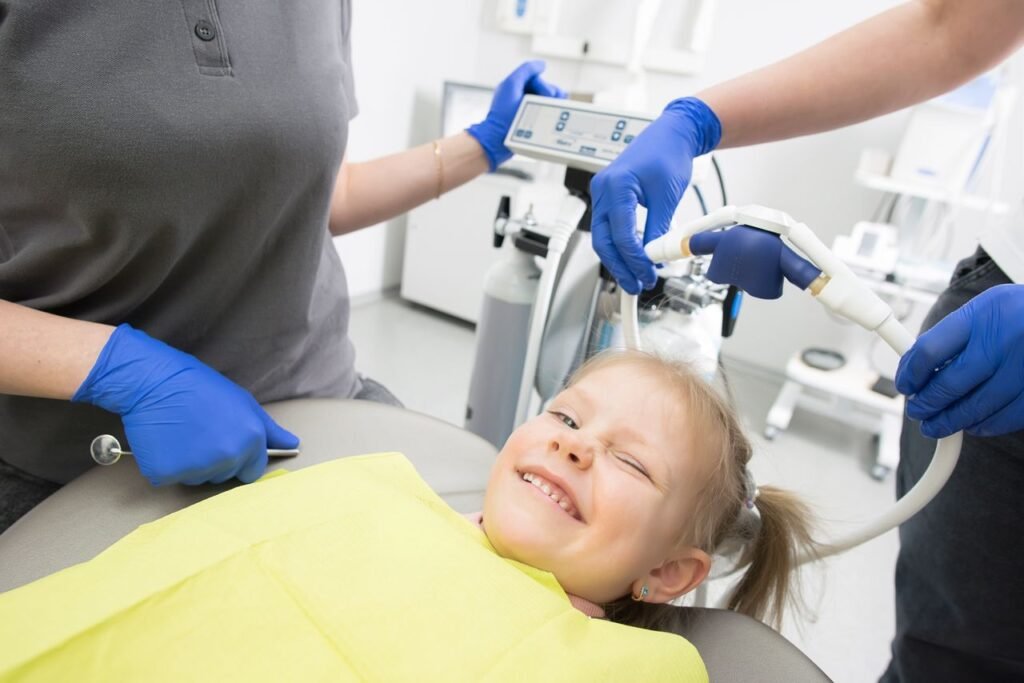
Your child should see the dentist by their first birthday, or within 6 months of their first tooth coming in, whichever comes first. The Canadian Dental Association recommends this early visit to catch problems and set good habits. A friendly dental clinic in Kitsilano can make that first visit short, calm, and fun.
Early visits focus on preventive dental hygiene, such as gentle cleaning, fluoride advice, and checking for early decay.
Meeting a dentist who’s patient with little ones helps children feel safe in the chair for life.
If your child chips a baby tooth, tooth-coloured composite bonding can often repair it gently. You can check reviews from local families on Enhance Dental Centre’s Google profile.
Quick answer
- First visit: by age 1, or within 6 months of the first tooth
- After that: every 6 months, or as your dentist advises
- Brushing: start as soon as the first tooth appears
- Toothpaste: a rice-grain smear under 3, pea-sized from 3 to 6
- Coverage: check BC Healthy Kids and CDCP eligibility
Why does the first visit happen so early?
Baby teeth can decay as soon as they appear. Early childhood tooth decay is one of the most common chronic diseases in Canadian children. It can cause pain, infection, and trouble eating and sleeping.
An early visit lets the dentist spot white chalky marks, the first sign of decay, before cavities form. It also gives you a chance to ask questions about teething, bottles, thumb sucking, and brushing.
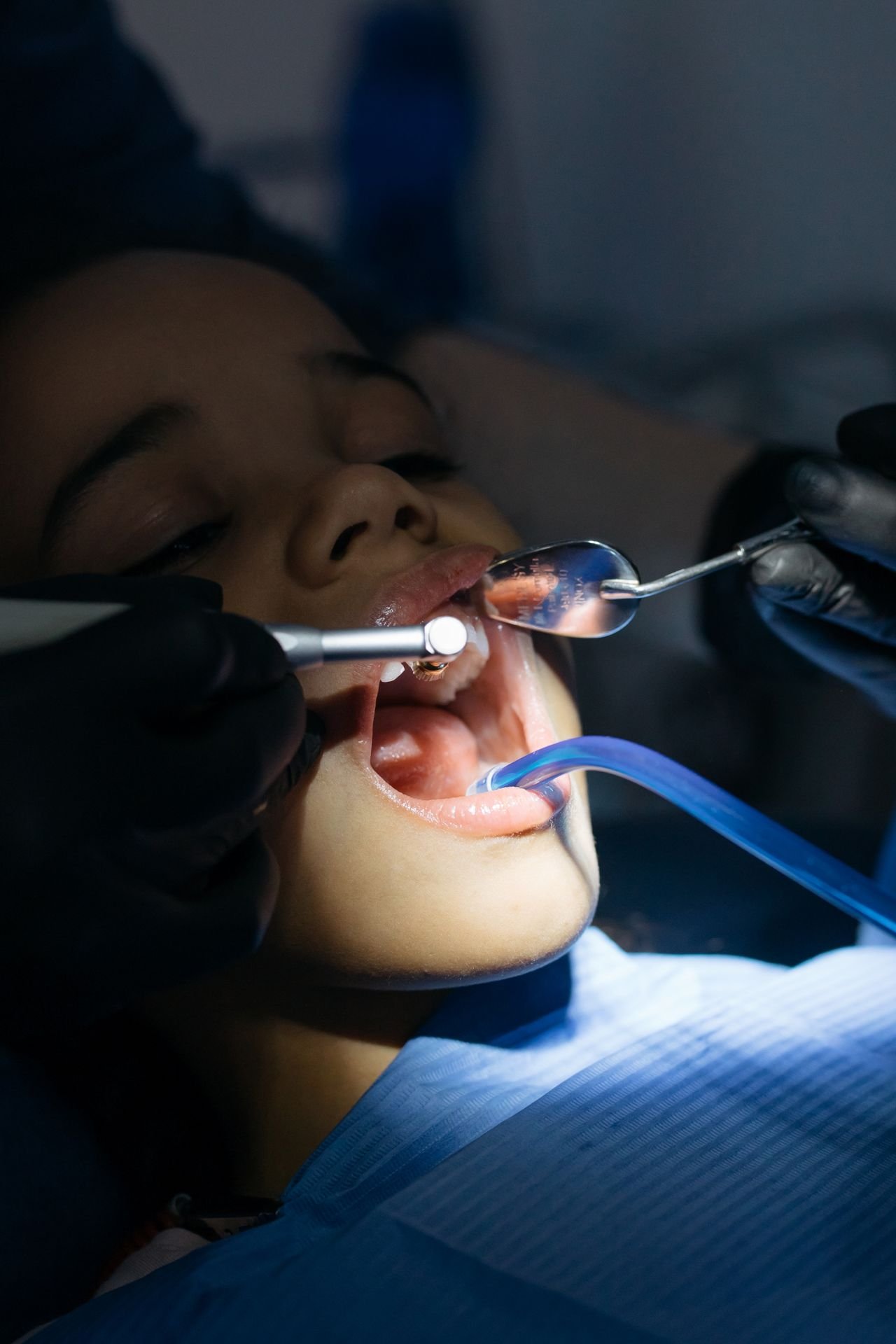
Why do baby teeth matter if they fall out?
- They help children chew and get good nutrition.
- They support clear speech.
- They hold space for adult teeth to come in straight.
- Infection in a baby tooth can harm the adult tooth forming underneath.
- Back baby teeth often stay until age 10 to 12.
What happens at a child’s first dental visit?
- Getting comfortable: babies and toddlers often sit on a parent’s lap, knee to knee with the dentist.
- A gentle look: the dentist checks the teeth, gums, jaw, and bite.
- Cleaning: a soft brush or cloth may be used, sometimes with fluoride varnish.
- Coaching for you: tips on brushing, diet, bottles, and soothers.
- Next steps: when to come back and what to watch for.
Most first visits take 15 to 30 minutes. X-rays are rarely needed at this age.
Children’s dental milestones
| Age | What usually happens |
|---|---|
| 6 to 10 months | First teeth, usually lower front |
| By 12 months | First dental visit |
| 2 to 3 years | All 20 baby teeth in |
| 3 to 6 years | Pea-sized toothpaste, supervised brushing |
| 6 to 7 years | First adult molars, sealants may be advised |
| 7 years | Bite check for orthodontic needs |
| 10 to 13 years | Most baby teeth lost |
How do you care for your child’s teeth at home?
Babies (0 to 1)
- Wipe gums with a clean, damp cloth after feeds.
- Start brushing with a soft baby brush when the first tooth appears.
- Don’t put your baby to bed with a bottle of milk or juice.
Toddlers (1 to 3)
- Brush twice a day with a rice-grain smear of fluoride toothpaste, if your dentist recommends it.
- Move from bottle to open cup by around 12 to 18 months.
- Limit sweet snacks and drinks to mealtimes.
Preschool and school age (3+)
- Use a pea-sized amount of fluoride toothpaste.
- Help with brushing until about age 8. Most children can’t clean well alone before then.
- Start flossing when teeth touch.
- Offer water between meals.
How can you ease teething?
Teething can make babies fussy, drooly, and keen to chew everything. It usually starts around 6 months and comes and goes until about age 3.
- Offer a clean, chilled (not frozen) teething ring.
- Rub the gums gently with a clean finger.
- Wipe drool often to protect the skin.
- Ask your doctor or pharmacist about pain relief suitable for your baby’s age.
Health Canada advises against teething gels with benzocaine for young children, and amber teething necklaces carry a choking risk. A high fever or diarrhoea isn’t caused by teething, so check with your doctor if these appear.
Are soothers and thumb sucking bad for teeth?
Sucking is a natural comfort habit for babies. It rarely causes problems if it stops by around age 3 or 4. Longer habits can push the front teeth forward or create an open bite, where the front teeth don’t meet.
Gentle steps help. Praise your child for not sucking, offer a comfort toy at bedtime, and avoid dipping soothers in sugar or honey. Your dentist can watch the bite and suggest next steps if the habit continues.
What are dental sealants?
Sealants are thin, tooth-coloured coatings painted onto the chewing surfaces of back teeth. They fill the deep grooves where food and bacteria hide.
They’re usually placed on the first adult molars around age 6 and the second molars around age 12. The process is quick and painless, with no drilling or freezing. Sealants can lower the risk of cavities in those grooves a great deal and last for several years with check-ups.
Signs your child needs to see a dentist sooner
- White, brown, or black spots on teeth
- Tooth pain, or your child avoiding chewing on one side
- Swelling in the gums or face
- A chipped, knocked, or darkened tooth
- Bleeding gums
- Persistent bad breath
How can you make the first visit positive?
- Book in the morning, when little ones are usually rested.
- Read a picture book about visiting the dentist.
- Keep your words simple and positive. Avoid words like “hurt” or “needle”.
- Play dentist at home, counting teeth with a toothbrush.
- Stay calm yourself. Children pick up on parents’ feelings.
- Bring a comfort toy for the chair.
What should you do if your child knocks out a tooth?
Accidents happen, especially with toddlers learning to walk and older kids playing sports.
- Baby tooth knocked out: don’t put it back in, as this can damage the adult tooth underneath. Press clean gauze on the area and call the clinic.
- Adult tooth knocked out: hold it by the crown, rinse it briefly in milk, and try to place it back in the socket. If you can’t, keep it in milk and see a dentist within 30 to 60 minutes.
- Chipped or loose tooth: save any pieces, rinse with water, and book a same-day check.
A mouthguard for hockey, soccer, and other contact sports protects growing teeth.
Does insurance cover children’s dental visits?
Many families have coverage through work plans. In BC, the Healthy Kids Program can help low-income families with basic dental care for children. The Canadian Dental Care Plan (CDCP) also covers eligible children. Coverage rules change, so ask the clinic team to help you check what applies to your family.
Common myths about kids’ teeth, pain, and anxiety
“Baby teeth don’t need fillings because they fall out.”
Untreated cavities in baby teeth can cause pain, infection, and damage to adult teeth.
“My child will be scared, so we should wait.”
Early, easy visits build trust. Children who first visit for pain often find dentistry more stressful.
“Fluoride is unsafe for kids.”
Used in the right amounts, fluoride is safe and strongly protects against decay.
“Juice is a healthy drink for teeth.”
Juice is high in sugar and acid. Water and milk are better choices.
Real family examples
The bedtime bottle. A 2-year-old had chalky white marks on her top front teeth. Switching from a bedtime bottle to water and adding fluoride varnish stopped the decay from progressing.
The playground fall. A 5-year-old chipped a front baby tooth. The dentist smoothed the edge and checked it at follow-up visits.
The nervous toddler. A boy cried at his first visit. After 2 short “ride the chair” visits, he happily opened wide at his 6-month check-up.
Mistakes parents often make
- Waiting until age 3 or until there’s a problem
- Using too much toothpaste for young children
- Letting kids brush alone too early
- Offering sweet drinks in sippy cups all day
- Sharing spoons, which can pass cavity-causing bacteria
Choosing a family dentist in Vancouver BC
Look for a team that is gentle with children, explains things in simple words, and welcomes the whole family. Evening appointments make it easier to visit after school or daycare.
Enhance Dental Centre is a trusted family dentist in Vancouver BC, rated 5.0 on Google from more than 270 reviews. The clinic welcomes new patients and CDCP patients, and many parents call it the best dental clinic in Vancouver for kids and adults alike.
Visit 2219 West Broadway, Vancouver, BC V6K 2E4. The clinic is open Monday and Tuesday 8 to 5, Wednesday and Thursday 10 to 7 for evening appointments, and Friday 8 to 4. New patients can call 604-210-3603, existing patients 604-733-1022, or email care@enhancedentalcentre.com.
Frequently asked questions
What age should a child first go to the dentist?
By age 1, or within 6 months of the first tooth.
How often should children see the dentist?
Usually every 6 months, though some children need more frequent visits.
Should I use fluoride toothpaste for my baby?
Ask your dentist. Many children benefit from a rice-grain smear from the first tooth.
What if my child won’t open their mouth?
That’s normal. The team will go slowly and try again at the next visit.
Can I stay with my child during the visit?
Yes. Young children usually sit with a parent.
Conclusion
Children should first see the dentist by age 1 or within 6 months of the first tooth.
Early visits catch decay and help you build healthy habits at home.
A calm, positive start helps children feel at ease with dental care for life.