
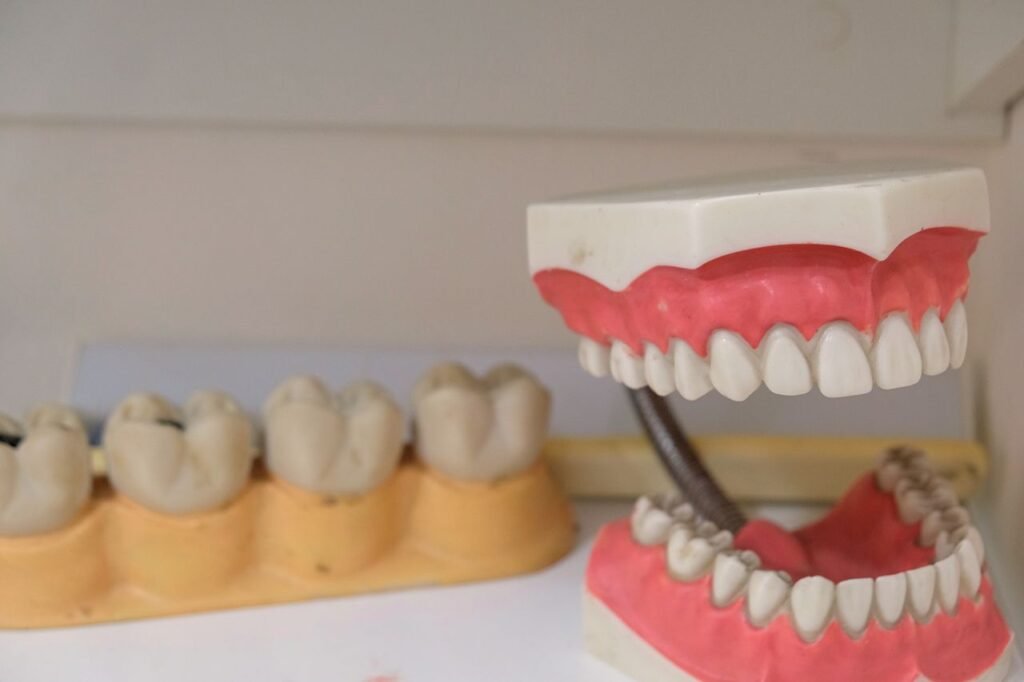
Yes, you can get dentures the same day your teeth are pulled. They’re called immediate dentures, and they’re made in advance so they can go in right after the extractions, meaning you never leave without teeth. Some soreness and a loose-feeling fit in the first weeks are common and expected as the gums heal and shrink. Severe pain, heavy bleeding or swelling that keeps growing after day 3 is not, and needs a call to your dentist. Ask about options at your dentures consultation.
For a lot of people, the fear isn’t the extraction. It’s walking out of the office with no teeth and having to face work, family and the grocery store like that. Immediate dentures solve that problem.
The process starts with planning before the tooth extractions. We take scans or impressions, choose the tooth shape and shade, and the lab builds your denture before extraction day.
At Enhance Dental Centre, a family dentist in Vancouver BC on West Broadway in Kitsilano, we also talk through what comes after, because the first denture is rarely the forever denture.
Some patients later choose to stabilize their dentures with dental implants. Others keep a few healthy teeth and use a partial or fixed bridge instead. The right path depends on your gums, bone and budget.
What are immediate dentures?
Immediate dentures are full or partial removable dentures made before your remaining teeth are extracted and placed in your mouth right after the extractions, during the same appointment.
They act like a bandage over the extraction sites, which helps control bleeding and protects the healing gums. They also let you speak, smile and eat soft foods from day one.
Immediate vs conventional dentures
| Feature | Immediate denture | Conventional denture |
|---|---|---|
| When it’s placed | Same day as extractions | After gums heal, usually 6 to 12 weeks or more |
| Time without teeth | None | Weeks to months |
| Fit over time | Loosens as gums shrink, needs relines | More stable from the start |
| Try-in before final | Limited, teeth still in the way | Full try-in, easier to fine-tune looks |
| Long-term role | Often a transition denture | Designed as the long-term denture |
Who is a good candidate for same-day dentures?
- People who need all or most remaining teeth removed because of decay, gum disease or failing restorations
- Anyone who can’t go without teeth for work or personal reasons
- Patients healthy enough for multiple extractions in one visit
- People willing to come back for adjustments and relines over the first year
Heavy smokers, people with uncontrolled diabetes and anyone on certain bone medications may need extra planning, because healing can be slower.
What happens step by step?
- Consultation and exam. X-rays, gum and bone assessment, and a talk about your goals.
- Treatment planning. Deciding which teeth come out, whether any can be saved, and full vs partial denture.
- Records. Impressions or digital scans, bite records, tooth shade and shape.
- Lab fabrication. Usually 2 to 4 weeks. Back teeth are sometimes removed earlier so those areas can start healing.
- Extraction day. Teeth are removed under local anesthetic, with sedation if needed, and the denture goes in right away.
- 24-hour check. You usually keep the denture in overnight, then return next day for the first adjustment.
- Follow-ups. Several short visits to fix sore spots in the first few weeks.
- Reline or new denture. Around 3 to 6 months, once gums have settled.
What is healing like with immediate dentures?
| Timeframe | What to expect |
|---|---|
| Day 1 | Keep the denture in, light bleeding and soreness, soft or liquid foods |
| Days 2 to 7 | Swelling peaks then eases, first adjustments, start salt-water rinses |
| Weeks 2 to 6 | Gums shrink quickly, denture feels looser, a soft temporary liner may be added |
| Months 3 to 6 | Shrinkage slows, hard reline or new denture made |
| Year 1 onward | Yearly checks, relines every few years as the ridge keeps changing |
Expect to talk a little funny for a week or two. Reading aloud speeds this up. “Sixty-six” and “Mississippi” are good practice words, if you don’t mind your family laughing.
Pros and cons of immediate dentures
Pros
- You never go without teeth
- The denture protects healing sockets and limits bleeding
- Easier to adapt to speaking and eating while swelling is still there
- Can help keep facial support so you don’t look sunken
Cons
- Needs more adjustments and at least one reline
- Less chance to preview how the teeth will look
- Gets loose as the gums heal, sometimes needing adhesive
- Often replaced with a new denture within the first year or two
How do immediate dentures compare to other tooth replacement options?
| Option | Fixed or removable | Best for |
|---|---|---|
| Immediate denture | Removable | Full or partial extractions, no time without teeth |
| Conventional denture | Removable | Already healed gums |
| Partial denture | Removable | Several missing teeth with healthy teeth remaining |
| Implant-retained overdenture | Removable, snaps on | Loose lower dentures, more chewing power |
| Full-arch implant bridge | Fixed | People who want teeth that don’t come out |
| Fixed bridge | Fixed | 1 to 3 missing teeth with strong neighbours |
Dentures are restorative dentistry: they replace missing teeth to bring back chewing and speech. A well-made denture also has a cosmetic side, since tooth shape, colour and lip support change how your face looks.
Myths about extractions, dentures and pain
“Having lots of teeth removed at once will be unbearable.”
Local anesthetic means you feel pressure, not sharp pain, during extractions. Sedation is an option for anxious patients. Afterward, soreness is real but usually manageable with prescribed or over-the-counter pain relief.
“Everyone will be able to tell I wear dentures.”
Modern denture teeth come in many shapes and shades, and gum-coloured acrylic is tinted to look natural. Most people around you won’t notice.
“Dentures mean I’m done with the dentist.”
Your gums, jawbone and soft tissues still need checking, including oral cancer screening. Denture wearers should still be seen at least once a year.
Typical patient scenarios
The teacher. A high school teacher in Kitsilano needed her remaining upper teeth removed due to advanced gum disease. Extractions happened on a Friday with an immediate denture, and she was teaching again Monday, a bit lispy but smiling.
The retiree with a partial. A patient with 4 failing lower teeth kept the healthy ones and got an immediate partial denture. A year later, 2 implants were added to support it.
The loose upper. At 8 weeks, a patient’s immediate denture felt like it was “floating.” A soft reline fixed the fit until the final hard reline at 5 months.
Common mistakes to avoid
- Taking the denture out in the first 24 hours (swelling can make it hard to put back)
- Skipping adjustment visits and putting up with sore spots
- Using heavy denture adhesive instead of getting a reline
- Eating hard or sticky foods too soon
- Sleeping in dentures every night long term, which can irritate the gums
Call your dentist if bleeding doesn’t slow after 30 minutes of firm pressure, if swelling keeps increasing after day 3, if you develop a fever, or if a sore spot turns into an ulcer that doesn’t heal within 2 weeks. Tell your dentist about blood thinners, diabetes and bone-strengthening drugs before extractions. This article is general information only.
How to care for immediate dentures
- After the first 24 hours, remove and rinse the denture after meals
- Brush the denture daily with a soft brush and denture cleaner (regular toothpaste scratches it)
- Rinse your mouth with warm salt water a few times a day during healing
- Store the denture in water or a soaking solution so it doesn’t dry out and warp
- Take it out at night once your dentist says healing allows
- Book every follow-up, even when it feels fine
Choosing the right dental clinic in Vancouver for dentures
Look for a team that plans extractions and dentures together, offers sedation if you’re nervous, and books follow-ups as part of the plan. Make sure care comes from dentists licensed with the College of Dental Surgeons of British Columbia (CDSBC), now part of the BC College of Oral Health Professionals.
Enhance Dental Centre at 2219 West Broadway, Vancouver, BC V6K 2E4 is one of the most trusted dental clinics in Kitsilano and Vancouver, with a 5.0 Google rating from more than 270 patient reviews. We welcome new patients and CDCP patients, and the Canadian Dental Care Plan includes coverage for dentures for many eligible patients.
We’re open Monday and Tuesday 8:00 AM to 5:00 PM, Wednesday and Thursday 10:00 AM to 7:00 PM, and Friday 8:00 AM to 4:00 PM, so evening consultations are available mid-week.
New patients can call 604-210-3603. Existing patients can call 604-733-1022, or email care@enhancedentalcentre.com.
What can you eat in the first weeks with immediate dentures?
| Stage | Foods that work |
|---|---|
| Days 1 to 3 | Broth, yogurt, applesauce, pudding, smoothies eaten with a spoon |
| Days 4 to 14 | Scrambled eggs, mashed potatoes, soft fish, oatmeal, well-cooked pasta |
| Weeks 3 to 6 | Soft bread without crust, cooked vegetables, ground meat, rice |
| After 6 weeks | Most foods cut into small pieces, chewing on both sides at once |
Chewing evenly on both sides helps keep the denture steady. Cut food small. Corn on the cob, whole apples and sticky toffee are best saved for much later, or never.
Signs you need a dental visit while adjusting to dentures
- A sore spot that comes back every time you eat
- The denture rocks, clicks or drops when you talk
- Cracks at the corners of your mouth
- White or red patches under the denture
- You’ve started avoiding foods you used to manage
Most of these are fixed in a short adjustment visit. Waiting usually means more irritation.
Will my face look different after extractions?
Teeth and the bone around them support your lips and cheeks. When teeth come out, that support shrinks over time, which is why long-term denture wearers can look like their mouth has sunk in.
An immediate denture puts support back on day one, so most people look much like themselves. As the bone remodels, relines and new dentures keep that support in place. Implants go further by slowing the bone loss itself.
Bring a photo of your smile from a few years back to your consultation. It helps the lab match tooth size, shape and how much tooth shows when you talk.
Frequently asked questions
How long do I keep immediate dentures in after extractions?
Usually 24 hours without removing them. Your dentist removes the denture at the next-day check, cleans it and makes the first adjustments.
How long do immediate dentures last?
They are often used for 6 months to 2 years. After the gums finish shrinking, the denture is either hard relined or replaced with a new conventional denture.
Can I eat normally with immediate dentures?
Not right away. Start with liquids and very soft foods, then slowly add more texture over several weeks as healing and confidence improve.
Do immediate dentures hurt?
Some soreness is normal for the first week. Sore spots are adjusted at follow-up visits. Constant or increasing pain should be checked.
Does CDCP cover immediate dentures?
The Canadian Dental Care Plan covers removable dentures for many eligible patients, sometimes with preauthorization and co-payments based on income. Ask the clinic to confirm your coverage.
Conclusion
Immediate dentures let you leave your extraction appointment with teeth, so you never go without a smile. Expect a few weeks of adjustments and at least one reline as your gums heal. A careful plan before extraction day makes the whole process smoother and more comfortable.