
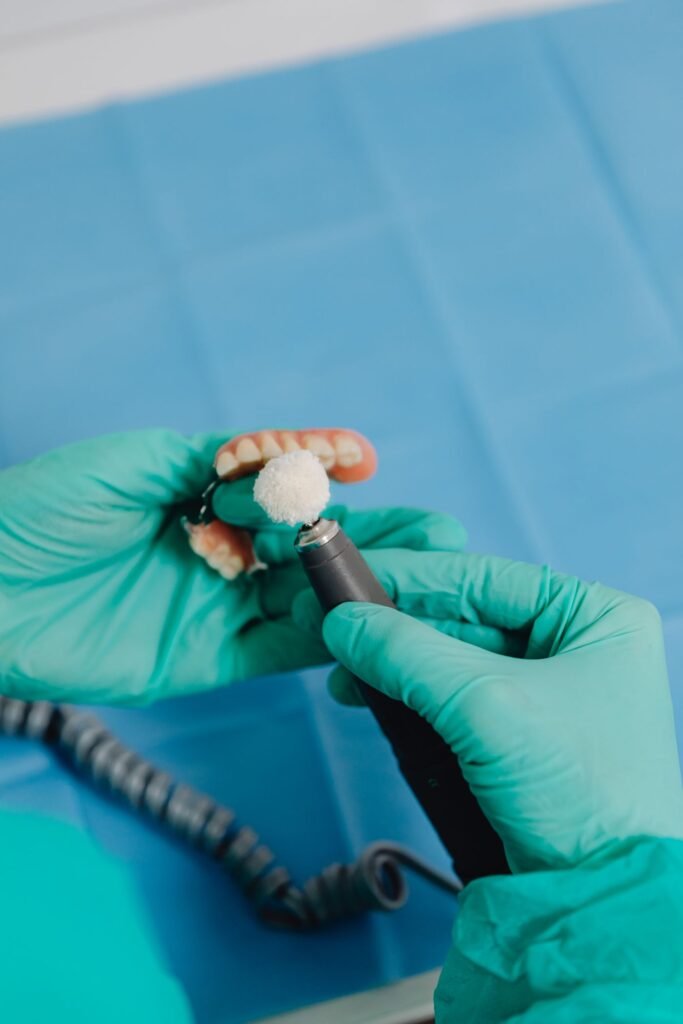
Yes, sleeping with your dentures in is generally a bad idea. Your gums need 6 to 8 hours a night without pressure, and dentures worn round the clock collect bacteria and yeast that can lead to sore gums, denture stomatitis and, in older adults, a higher risk of pneumonia. An occasional night is not an emergency. Making it a habit is what causes problems, which is why every denture fitting comes with night-time care instructions.
I get why people do it. Dentures feel like part of you after a while, and some people hate the idea of a partner seeing them without teeth. Others simply fall asleep on the couch and forget.
The trouble is what happens under the acrylic. Saliva can’t reach the gums, plaque builds on the fitting surface and the tissue never gets a break. That’s the same reason your hygienist checks the gums and tongue closely during preventive dental visits, even when you have no natural teeth left.
Long-term pressure also speeds up bone loss in the jaw. Dentures then loosen, rub and cause sores. Any sore spot that doesn’t heal within 2 weeks deserves a look, and an oral cancer screening is part of that check for denture wearers.
If you’d honestly like teeth that stay in at night, implant-supported options are worth asking about. Snap-on overdentures still come out for cleaning, while fixed implant bridges stay in. A dentist in Kitsilano can walk you through which suits your jaw and health.
What actually happens when you sleep in dentures?
Sleeping in dentures keeps the gums covered, warm and moist for up to 24 hours a day, which is perfect for bacteria and Candida yeast to grow. Saliva flow also drops at night, so there’s less natural cleaning going on.
Here’s what that can lead to over weeks and months:
- Denture stomatitis. Red, swollen tissue under the denture, usually on the palate. Often painless, so people don’t notice.
- Angular cheilitis. Cracked, sore corners of the mouth.
- Bad breath and a bad taste in the morning.
- Faster bone resorption, which makes the denture loose sooner.
- Pressure sores and ulcers on the ridge.
Is there a link between sleeping in dentures and pneumonia?
Yes, for older adults. A Japanese study of more than 500 seniors found that those who wore dentures overnight had roughly double the risk of pneumonia compared with those who removed them. The likely reason is that bacteria from a dirty denture get breathed into the lungs during sleep.
That’s a big deal for anyone over 75, people in care homes and anyone with swallowing difficulties. For them, overnight removal and daily cleaning are a health issue, beyond comfort.
Is it ever okay to sleep with dentures in?
There are a few exceptions, and your dentist will tell you if one applies:
- The first 24 hours after extractions with an immediate denture. It acts like a bandage. Don’t take it out until your follow-up visit unless told otherwise.
- Some people with TMJ problems or sleep apnea are advised to wear them at night. This is case by case.
- A partial denture protecting a single remaining tooth from being bitten on, in specific situations.
If your dentist has told you to sleep in them, you’ll need extra cleaning and a daily “off” window of several hours.
How should you care for dentures overnight?
- Remove the denture and rinse off food.
- Brush it with a soft denture brush and mild soap or denture paste. Regular toothpaste is too abrasive and scratches acrylic.
- Soak it overnight in water or a denture-cleaning solution. Don’t let it dry out, or it can warp.
- Never use hot or boiling water.
- Brush your gums, tongue and palate gently with a soft toothbrush.
- In the morning, rinse the denture well before putting it back.
How do full dentures, partials and implant options compare at night?
| Type | Remove at night? | Main night-time concern |
|---|---|---|
| Full conventional denture | Yes | Gum irritation, yeast, bone loss |
| Partial denture | Yes | Plaque on clasps can decay the teeth they hook onto |
| Implant-retained overdenture | Yes, usually | Cleaning around the implant attachments |
| Fixed implant bridge | No (only the dentist removes it) | Daily cleaning under the bridge with a water flosser |
Where do dentures sit among general, restorative and cosmetic care?
Dentures are restorative: they replace missing teeth so you can chew and speak. Regular exams and relines fall under general care. Choosing a natural-looking tooth shade and gum colour is the cosmetic part. A full-service clinic handles all three in one place, which makes follow-up much easier.
What are the signs your dentures need attention?
- Red or swollen gums under the denture
- White patches that wipe off (often yeast)
- Sores that last longer than 2 weeks
- Clicking, slipping or needing more adhesive than before
- A crack, chip or broken tooth on the denture
- Pain when chewing
Most dentures need a reline every 1 to 2 years and replacement every 5 to 8 years as the jaw changes shape.
What happens at a denture check-up?
- Gum and tissue exam. The dentist looks for stomatitis, sores and any unusual patches.
- Oral cancer screening. A quick visual and touch check of the tongue, cheeks, palate and neck.
- Fit check. Pressure spots are found and adjusted.
- Professional clean. Tartar and stains are removed from the denture.
- Plan. Reline, repair, replacement or an implant consultation if fit keeps slipping.
Real situations a family dentist sees
Every family dentist in Vancouver BC with older patients sees these regularly.
Common denture mistakes
- Sleeping in them every night
- Cleaning with regular toothpaste or bleach
- Soaking in hot water
- Using more and more adhesive to fix a poor fit
- Adjusting or repairing them at home with glue
- Skipping dental visits because “there are no teeth to check”
Are denture fittings painful? A few myths
A common worry is that new dentures always hurt for months. Some soreness in the first 1 to 2 weeks is normal while the gums adapt, and small adjustments fix most of it quickly. Ongoing pain means the fit needs work.
Another myth: once you have dentures, you don’t need a dentist. In fact the mouth keeps changing, and annual checks are what keep dentures comfortable and catch tissue problems early.
How do you choose a denture provider in Vancouver?
Look for care led by a dentist registered with the College of Dental Surgeons of British Columbia (CDSBC), which is now part of the BC College of Oral Health Professionals. A dentist can diagnose tissue problems, place implants if needed and coordinate with your physician.
Enhance Dental Centre is one of the most trusted dental clinics in Kitsilano and Vancouver, with a 5.0 Google rating from more than 270 patient reviews. Many patients describe it as the top dentist in Kitsilano for patient, unrushed denture care.
The clinic is accepting new patients and CDCP patients, which matters for many seniors now covered under the Canadian Dental Care Plan. If you’ve been looking for a CDCP dentist in Vancouver, you can call 604-210-3603 (new patients) or 604-733-1022 (existing patients), or email care@enhancedentalcentre.com.
The office is at 2219 West Broadway, Vancouver, BC V6K 2E4. Hours: Monday and Tuesday 8:00 AM to 5:00 PM, Wednesday and Thursday 10:00 AM to 7:00 PM, and Friday 8:00 AM to 4:00 PM.
Frequently asked questions
How many hours a day should dentures be out?
Most dentists recommend at least 6 to 8 hours out of the mouth every day, usually overnight, so the gums can rest and recover.
What happens if I fell asleep with my dentures in once?
One night won’t cause lasting harm. Take them out in the morning, clean them and your gums well, and go back to removing them at night.
Should dentures be stored wet or dry?
Wet. Dentures stored dry can warp and lose their fit. Use plain water or a denture-soaking solution.
Can I wear my partial denture at night?
Partials should also come out at night. Clasps trap plaque against natural teeth, which raises the risk of decay and gum disease.
Does the CDCP cover dentures?
The Canadian Dental Care Plan covers removable dentures for eligible members, with some services requiring preauthorization. The clinic can confirm what applies to you.
Conclusion
Taking dentures out at night gives your gums the rest they need and lowers infection risk.
Clean and soak them daily, and keep up with yearly checks even with no natural teeth.
If dentures feel loose or sore, a quick adjustment can make a big difference.