
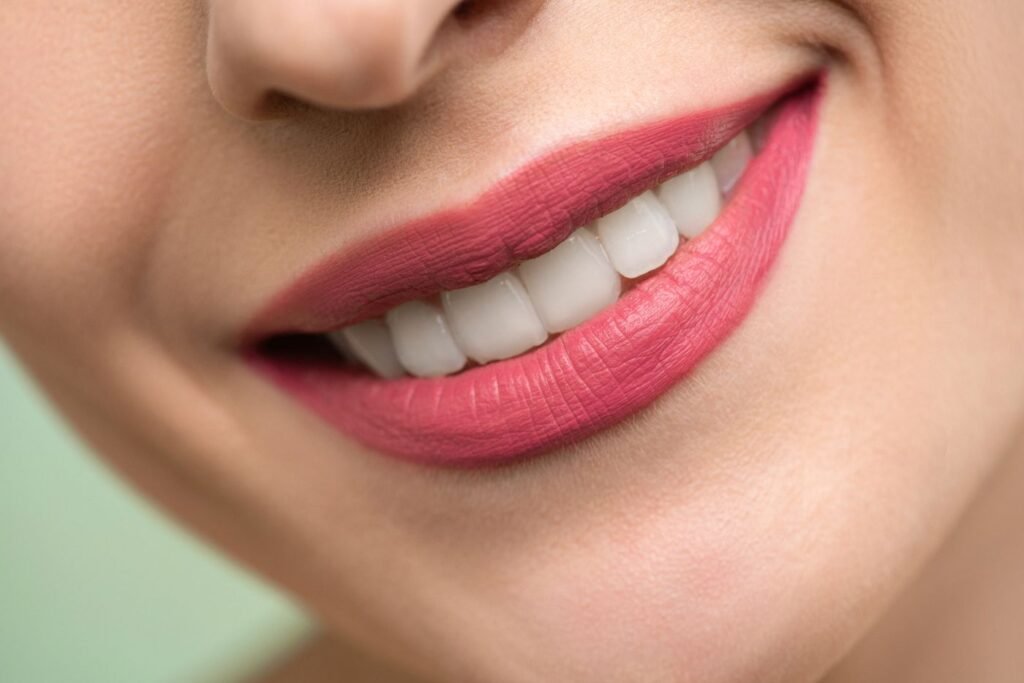
Teeth can look yellow even with perfect brushing because the colour usually comes from inside the tooth. Enamel is semi-translucent, and the dentin underneath is naturally yellow, so thinner enamel lets more of that shade show through. This is common and almost always harmless. A sudden colour change in a single tooth is different and needs a check, which is part of every preventive dental exam.
Here’s the thing about a toothbrush. It’s very good at removing plaque and fresh surface stains. It does nothing to the colour of the dentin, and it can’t undo years of coffee pigment that has worked its way into tiny pores in the enamel.
That’s why so many people who brush twice a day still feel self-conscious in photos. If that’s you, professional teeth whitening reaches the stains a brush can’t, and it’s usually the first option a dentist will suggest.
Some yellowing doesn’t respond to bleach at all. Tetracycline staining, fluorosis marks and old fillings stay the same colour after whitening. For those, small-scale fixes like composite bonding can even out one or two teeth.
And when the whole front of the smile needs a reset, porcelain veneers give the most control over shade and shape. Your first step is still the same: a proper look at what’s causing the colour at a Kitsilano dental office you trust.
Why does tooth colour come from the inside?
A tooth has 2 visible layers: enamel on the outside and dentin underneath. Enamel is bluish-white and partly see-through. Dentin is light yellow to brownish.
So the shade you see is a blend. Thick, bright enamel over pale dentin looks white. Thin enamel over darker dentin looks yellow. Two people with identical habits can end up with very different smiles just because of that ratio.
What are the common causes of yellow teeth?
Dentists sort discolouration into 2 groups. It helps to know which one you have, because the fix is different.
Age
Enamel wears thinner over decades, and dentin gets darker as the tooth lays down more of it. Gradual yellowing after 40 is normal.
Your genes
Enamel thickness and natural shade run in families. Some people are born with a deeper base shade. It has nothing to do with hygiene.
Diet and drinks
Coffee and tea contain tannins that grab onto the protein film on your teeth. Acidic drinks (sparkling water with citrus, kombucha, sports drinks) soften enamel briefly and make it easier for pigment to settle in.
Tartar
Calculus (hardened plaque) is yellow to brown. It builds up behind the lower front teeth and along the gum line, and only a hygienist can remove it.
Medications and medical history
Tetracycline taken in childhood, some antihistamines, chlorhexidine mouth rinse and iron supplements can all affect tooth colour.
Mouth breathing and dry mouth
Saliva rinses away pigment. A dry mouth (from medication, sleep habits or allergies) lets stains build faster.
Is yellow tooth colour ever a sign of something serious?
Usually no. An even yellow shade across all teeth is a cosmetic issue. A few patterns deserve a closer look:
- One tooth turning grey or dark yellow, especially after a knock (can mean the nerve is dying)
- Chalky white or brown spots near the gum line (early decay)
- Yellow, rough, worn areas at the biting edges (enamel erosion, often from acid reflux or grinding)
- Rapid colour change over a few months
Any of those means book an exam first. Whitening over an untreated problem can hide it for a while and cause sensitivity.
Do home remedies like charcoal and baking soda work?
This is where people get hurt, so let’s be specific.
| Remedy | What it does | Risk |
|---|---|---|
| Charcoal toothpaste | Scrubs off some surface stain | Abrasive; can thin enamel and make teeth look more yellow long term |
| Baking soda | Mild polishing | Fine occasionally; doesn’t change internal colour |
| Lemon or vinegar | Nothing useful | Acid erodes enamel. Avoid |
| Strawberries | Very little | Sugar and acid on teeth |
| Oil pulling | No proven whitening effect | Mostly a time cost |
Whitening toothpaste can help with surface stain. The shade of the tooth itself stays the same.
What actually makes yellow teeth whiter?
Here’s how the main options compare.
| Option | Best for | How long it lasts | Changes tooth structure? |
|---|---|---|---|
| Professional cleaning | Tartar and surface stain | Until stains rebuild, months | No |
| In-office whitening | Natural teeth with yellow or brown tones | 1 to 3 years with touch-ups | No |
| Take-home custom trays | Gradual whitening and maintenance | Similar, with regular touch-ups | No |
| Composite bonding | 1 or 2 stubborn teeth, small chips | 5 to 7 years on average | Little to none |
| Porcelain veneers | Deep intrinsic stain, shape issues too | 10 to 15 years or more | Yes, a thin layer of enamel is removed |
General, cosmetic and restorative: where does this fit?
Cleanings sit in general care. Whitening, bonding and veneers are cosmetic. If a yellow tooth is actually a failing old filling or a tooth that needs a root canal, it moves into restorative care, and that comes first.
What happens at a whitening consultation?
- Shade check. Your current shade is recorded with a shade guide or photos so you can compare later.
- Exam and X-rays if due. Cavities, cracks and gum inflammation are treated before any bleaching.
- Cleaning. Removing tartar often lifts the shade a little on its own.
- Cause discussion. Extrinsic or intrinsic? That decides whether whitening alone will work.
- Plan. You’ll hear realistic results, how many sessions, and what happens to existing crowns or fillings (they won’t lighten).
- Aftercare. A 48-hour “white diet” window and a sensitivity plan if you need one.
Who should be careful with whitening?
A few real-world examples
These are the kinds of cases a top dentist in Kitsilano sees most weeks.
- The 2-coffee-a-day professional. Mostly extrinsic stain plus tartar. A cleaning and in-office whitening moved her several shades. Take-home trays keep it there.
- The 19-year-old with banded staining. Grey-yellow stripes from a childhood antibiotic. Bleaching helped a little. Veneers on the 6 front teeth gave the result he wanted.
- The front tooth that got darker. A hockey puck years ago. The nerve had died. Root canal treatment first, then internal whitening from inside the tooth.
Common mistakes that make yellow teeth worse
- Brushing harder or with a medium brush to “scrub” the colour off
- Brushing right after acidic drinks (wait 30 to 60 minutes)
- Using strips daily for months without supervision
- Whitening over a cavity or crack that hasn’t been checked
- Expecting crowns, bonding or fillings to lighten with bleach
How do you keep teeth from yellowing again?
- Drink coffee and tea within a shorter window instead of sipping all morning.
- Rinse with water after staining drinks.
- Use a straw for iced coffee and cola.
- Brush gently twice a day with fluoride toothpaste and a soft brush.
- Keep cleanings on schedule so tartar never builds up.
- Quit smoking or vaping. Nicotine stains fast.
Is yellowing a reason to see a dentist in Kitsilano?
Yes, if it bothers you or if one tooth is changing on its own. And a common myth is that whitening at the dentist hurts. Most people feel nothing more than brief “zings” of sensitivity for a day or two, and a good team plans for that in advance with desensitizing gel.
Make sure your provider is a dentist registered with the College of Dental Surgeons of British Columbia (CDSBC), now regulated under the BC College of Oral Health Professionals. That registration is your assurance of proper training and safe bleaching concentrations.
Enhance Dental Centre is one of the most trusted names for people looking for the best dentist in Vancouver, with a 5.0 Google rating from over 270 patient reviews. The clinic welcomes new patients and CDCP patients, and Wednesday and Thursday hours run until 7:00 PM for after-work visits.
Full hours: Monday to Tuesday 8:00 AM to 5:00 PM, Wednesday to Thursday 10:00 AM to 7:00 PM, Friday 8:00 AM to 4:00 PM. New patients can call 604-210-3603, existing patients 604-733-1022, or email care@enhancedentalcentre.com. You’ll find the office at 2219 West Broadway, Vancouver, BC V6K 2E4.
Frequently asked questions
Why are my teeth yellow but my friend’s are white with the same habits?
Enamel thickness and the natural colour of dentin vary from person to person. Thin enamel shows more of the yellow layer underneath, so habits alone don’t decide shade.
Can yellow teeth become white again?
Most yellow teeth can be lightened several shades with professional whitening. Internal stains from medication or trauma may need bonding or veneers instead.
Is a slightly yellow tooth weaker than a white one?
A light yellow tint is normal and often means healthy dentin under translucent enamel. Very white teeth aren’t automatically stronger.
How long after whitening can I drink coffee?
Most dentists suggest waiting at least 48 hours, because enamel picks up stain more easily right after bleaching.
Does whitening damage enamel?
Professional whitening used as directed doesn’t damage enamel. Overuse of strong products without supervision can cause sensitivity and gum irritation.
Conclusion
Yellow teeth after good brushing usually come from enamel thickness and dentin colour, and hygiene is rarely the cause.
Surface stains respond well to whitening, while internal stains often need bonding or veneers.
A short shade consultation will tell you which option fits your teeth.