
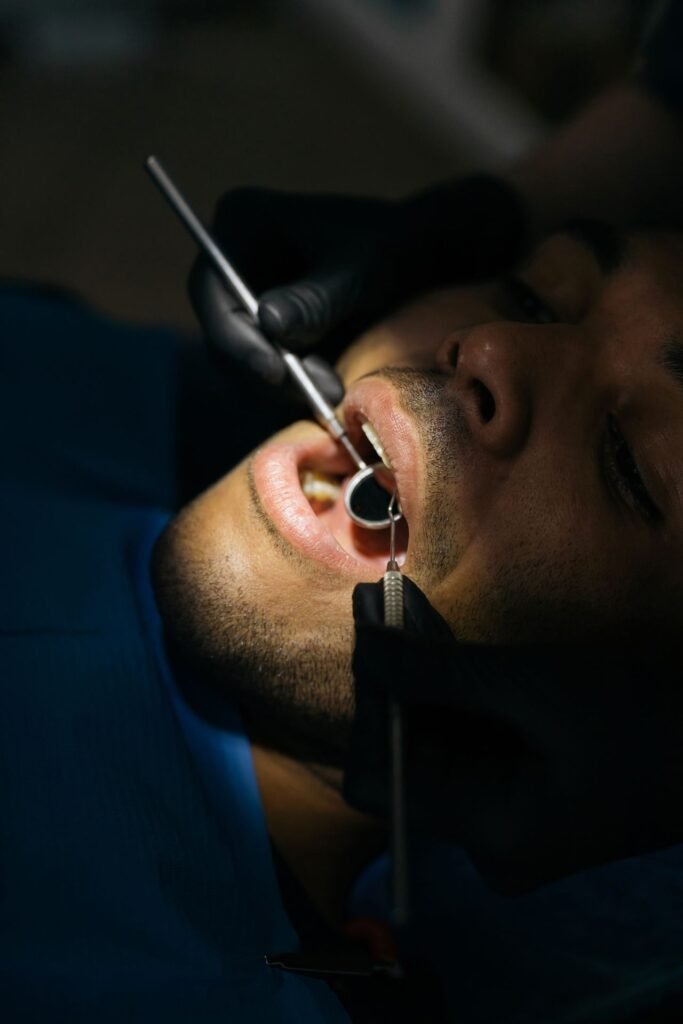
You probably need a deep cleaning if your gum pockets measure 4 mm or deeper, your gums bleed when probed, or X-rays show bone loss from gum disease. A deep cleaning (scaling and root planing) removes tartar and bacteria from below the gumline where a regular cleaning can’t reach. Mild gum inflammation is common and often fixed with a standard cleaning. Deeper pockets mean periodontitis, which is serious because it can lead to loose teeth, so periodontal treatment shouldn’t be delayed.
Being told you need a deep cleaning can feel like a surprise, especially if nothing hurts. Some people worry it’s an upsell. That’s a reasonable question to ask, and a good Dental Clinic in Kitsilano should show you exactly why it’s being recommended.
At Enhance Dental Centre, we walk you through your gum chart and X-rays during your preventive dentistry visit, so you see the numbers yourself. You can also read what patients say about how we explain things on our dental clinic Google listing.
Our dentist and hygiene team focus on clear, honest recommendations. Below is everything you need to decide for yourself.
What is a deep cleaning?
A deep cleaning, called scaling and root planing (SRP), is a non-surgical gum treatment that removes plaque and tartar from the tooth roots below the gumline and smooths the root surfaces so gums can heal and reattach.
It’s the standard first treatment for periodontitis. It’s usually done one section of the mouth at a time, with local anaesthetic for comfort.
Regular cleaning vs deep cleaning
| Regular cleaning | Deep cleaning (SRP) | |
|---|---|---|
| Purpose | Prevention and maintenance | Treating active gum disease |
| Area cleaned | Above and just under the gumline | Deep below the gumline, along the roots |
| Pocket depths | Usually 1 to 3 mm | Usually 4 mm or more |
| Freezing | Rarely | Usually |
| Appointments | 1 | Often 2 to 4 sections |
| Follow-up | Every 6 months or as advised | Re-evaluation, then maintenance every 3 to 4 months |
How do dentists decide you need a deep cleaning?
- Pocket depth measurement: a small probe measures the space between gum and tooth at 6 spots per tooth.
- Bleeding on probing: bleeding points show active inflammation.
- Attachment loss: how much gum and bone support has been lost.
- X-rays: show bone levels and tartar deposits on roots.
- Tooth mobility: loose teeth suggest more advanced disease.
- Risk factors: smoking, diabetes, family history and medications.
A single 4 mm reading on one tooth isn’t usually enough. The overall pattern decides.
Signs you might need a deep cleaning
- Gums that bleed when brushing or flossing
- Red, swollen or tender gums
- Persistent bad breath or bad taste
- Gums pulling away from teeth
- Teeth that look longer
- New gaps between teeth
- Loose teeth or a change in your bite
- Pus around the gums
What happens during a deep cleaning? (step by step)
- Numbing: local anaesthetic is applied to the section being treated.
- Scaling: ultrasonic and hand instruments remove tartar from roots inside the pockets.
- Root planing: root surfaces are smoothed so bacteria have a harder time reattaching.
- Irrigation: pockets are flushed, sometimes with an antimicrobial solution.
- Local medication (sometimes): a slow-release antibiotic may be placed in deeper pockets.
- Aftercare instructions: what to eat, how to clean and what to expect.
- Re-evaluation: about 4 to 8 weeks later, pockets are measured again.
Does a deep cleaning hurt?
During treatment, the area is frozen, so most people feel pressure and vibration. Afterward, gums may be tender for 1 to 3 days and teeth may feel sensitive to cold for a week or two as gums tighten. Over-the-counter pain relief, warm salt-water rinses and a desensitizing toothpaste usually help.
What happens if you skip a deep cleaning?
- Tartar below the gumline keeps feeding bacteria
- Pockets get deeper and harder to clean
- Bone around teeth continues to break down
- Teeth can loosen, shift or need to be removed
- Treatment later may involve gum surgery
Periodontitis is the leading cause of tooth loss in adults. Treating it early keeps options simple.
Safety note: tell your dentist if you have heart valve problems, a joint replacement, diabetes, a bleeding disorder or take blood thinners. Some patients need special precautions. Seek prompt care for facial swelling, fever or pus. This article is general information and doesn’t replace a personal diagnosis by a licensed dental professional.
What if a deep cleaning isn’t enough?
Most mild to moderate periodontitis responds well to SRP and good home care. If some pockets stay at 5 mm or deeper after re-evaluation, other options include:
- Repeat SRP in stubborn areas
- Local antibiotics placed directly into pockets
- Flap surgery, where the gum is gently lifted to clean roots under direct view and reshape bone
- Regenerative procedures that use grafts or membranes to rebuild lost support
- Gum grafts for recession that exposes roots
- Extraction and replacement for teeth that can’t be saved, often with implants once the gums are healthy
Gum disease and your overall health
Periodontitis has been linked in research to diabetes, heart disease and pregnancy complications. With diabetes, the link runs both ways: high blood sugar makes gum disease worse, and treating gum disease may help with blood sugar control. These links don’t prove that gum disease causes other illnesses, but they’re a good reason to treat it rather than wait.
What does a full-service dental clinic offer for gum health?
Gum care touches every part of dentistry. A full-service clinic covers:
| Type of care | Role in gum health |
|---|---|
| General and preventive | Exams, cleanings, charting, X-rays, oral cancer screening |
| Periodontal | Deep cleaning, maintenance, gum surgery |
| Restorative | Replacing teeth lost to gum disease with implants, bridges or dentures |
| Cosmetic | Bonding or veneers to close gaps once gums are stable |
Your first visit for gum concerns (step by step)
- Share your concerns and health history, including medications and smoking.
- Have a full exam and gum charting.
- Take X-rays if needed to check bone levels.
- Review your chart and images with the dentist or hygienist.
- Discuss treatment options, timing and comfort.
- Book treatment and a re-evaluation date.
You’ll leave knowing your numbers, what they mean, and what happens next. No guesswork.
Myths about deep cleanings
“Deep cleanings are just a sales tactic.”
When pocket depths, bleeding and X-rays support it, SRP is the accepted standard of care for periodontitis. You’re always entitled to see your chart and ask for an explanation.
“A deep cleaning will make my teeth loose.”
Teeth may feel slightly different as swollen gums shrink back, but SRP removes the cause of loosening.
“If my gums stop bleeding, I’m cured.”
Periodontitis is a chronic condition. It can be controlled, but it needs ongoing maintenance cleanings.
“Mouthwash can replace a deep cleaning.”
Rinses can’t remove hardened tartar on root surfaces. Only mechanical cleaning does that.
Common mistakes patients make
- Waiting for pain before treating gum disease
- Doing only half of the recommended sections
- Skipping the re-evaluation visit
- Returning to 6-month cleanings too soon after periodontitis
- Stopping flossing because gums bleed
What should you expect in the days after treatment?
- Day 1: numbness wears off in a few hours; gums may ache a little. Stick to soft, lukewarm food.
- Days 2 to 3: tenderness fades. Start gentle brushing and warm salt-water rinses.
- Week 1 to 2: teeth may feel sensitive to cold as gums tighten. A desensitizing toothpaste helps.
- Weeks 4 to 8: gums look pinker and firmer; bleeding drops noticeably.
If pain gets worse instead of better, or you notice swelling, call the clinic.
Real patient scenarios
Scenario 1: A 45-year-old Kitsilano runner came in for a routine cleaning after 2 years away. His chart showed 5 mm pockets around several molars. After 2 visits of SRP and a new interdental brush routine, his pockets dropped to 3 mm at re-evaluation.
Scenario 2: A patient with diabetes had bleeding gums and 6 mm pockets. SRP plus 3-month maintenance cleanings, and working with her doctor on blood sugar, helped stabilize her gums over the next year.
How to keep gums healthy after a deep cleaning
- Brush twice a day with a soft brush angled at the gumline.
- Clean between teeth daily with floss or interdental brushes.
- Use any prescribed rinse as directed.
- Don’t smoke or vape.
- Keep maintenance cleanings every 3 to 4 months.
- Manage diabetes and other health conditions.
What do pocket depth numbers mean?
| Pocket depth | What it usually means |
|---|---|
| 1 to 3 mm, no bleeding | Healthy gums |
| 1 to 3 mm with bleeding | Gingivitis, often reversible with a regular cleaning and better home care |
| 4 mm | Early periodontitis or swollen gums; may need targeted deep cleaning |
| 5 to 6 mm | Moderate periodontitis; deep cleaning recommended |
| 7 mm or more | Advanced periodontitis; deep cleaning and possibly surgery |
Ask your hygienist to call out the numbers during charting and explain any that changed since your last visit. Tracking them over time is the clearest way to see whether your gums are improving.
Questions to ask before agreeing to a deep cleaning
- Which teeth have pockets of 4 mm or more?
- Do my X-rays show bone loss?
- How many visits will it take, and will you freeze each area?
- When will you re-measure my pockets?
- How often will I need maintenance cleanings afterward?
A clinic that welcomes these questions is a good sign.
How to choose a dentist in Kitsilano for gum care
- Look for full periodontal charting at your exam
- Ask to see your X-rays and pocket numbers
- Choose a clinic that offers follow-up re-evaluation
- Check reviews for clear communication
- Consider hours that fit your routine
Gum care at Enhance Dental Centre
If you’re looking for a Top Dentist in Kitsilano for gum treatment, Enhance Dental Centre is one of the most trusted clinics in Kitsilano and Vancouver, with a 5.0 Google rating from more than 270 patient reviews. We accept new patients and CDCP patients.
All care is provided by licensed dental professionals registered with the College of Dental Surgeons of British Columbia (CDSBC), now part of the BC College of Oral Health Professionals.
Find us at 2219 West Broadway, Vancouver, BC V6K 2E4. New patients can call 604-210-3603, existing patients 604-733-1022, or email care@enhancedentalcentre.com. Hours: Monday to Tuesday 8:00 AM to 5:00 PM, Wednesday to Thursday 10:00 AM to 7:00 PM, and Friday 8:00 AM to 4:00 PM, with evening appointments midweek.
Frequently asked questions
How long does a deep cleaning take?
Each section usually takes 45 to 60 minutes. Many patients have the mouth treated in 2 to 4 visits, depending on how much tartar and pocketing there is.
How long does it take gums to heal after a deep cleaning?
Tenderness usually settles in 1 to 3 days. Gums continue to tighten over 4 to 8 weeks, which is when pocket depths are re-measured.
Can I eat normally after a deep cleaning?
Wait until the freezing wears off, then choose soft foods for a day or two. Avoid very hot, spicy or crunchy foods until gums feel comfortable.
Will I need a deep cleaning again?
Many patients don’t need a full repeat if they keep up maintenance cleanings every 3 to 4 months and good home care. Some areas may need re-treatment if pockets stay deep.
Is a deep cleaning covered by CDCP or insurance?
Scaling and root planing is often covered in part by dental plans, including CDCP in many cases. Coverage varies, so check your plan or ask the clinic to help.
Conclusion
You likely need a deep cleaning if your pockets are 4 mm or deeper, your gums bleed on probing, or X-rays show bone loss. It’s a comfortable, non-surgical treatment done with freezing. Follow-up maintenance keeps gum disease under control and protects your teeth.