
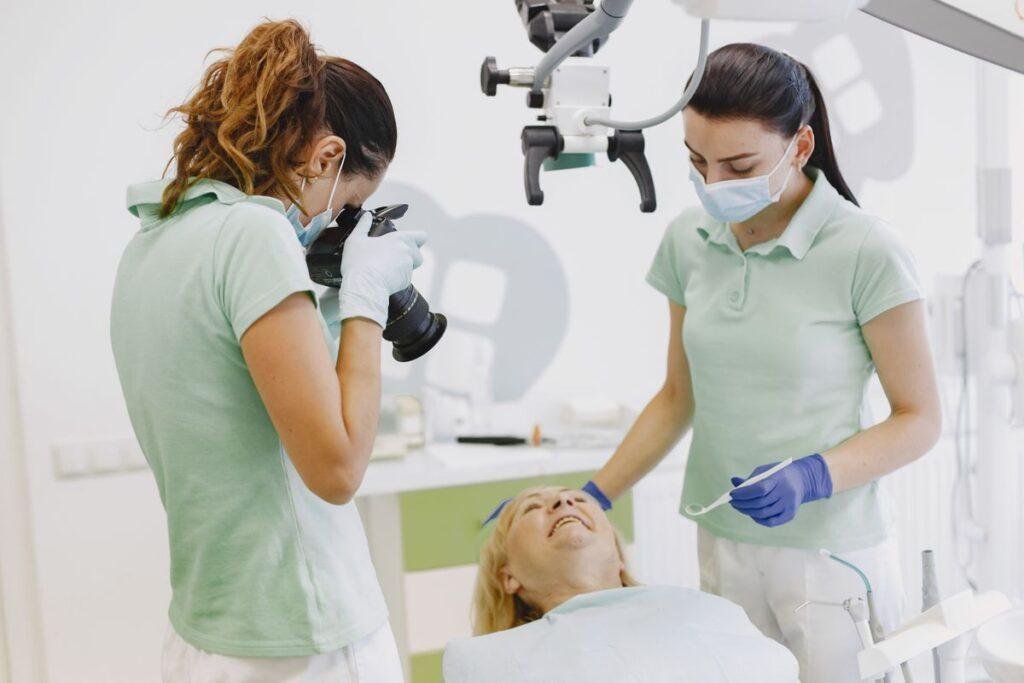
Tooth loss is not a normal part of ageing. Most seniors can keep their natural teeth for life with consistent preventive care, and the problems that do appear, such as root decay, dry mouth and gum recession, are common and manageable rather than inevitable. Regular attendance at a family dentist in Vancouver BC is what makes the difference between maintaining teeth and replacing them.
The pattern of dental disease changes with age. Cavities move from the biting surfaces to the exposed roots, gum support gradually reduces, and decades-old restorations reach the end of their service life. Structured preventive dentistry targets these specific risks.
Where support has already been lost, periodontal treatment stabilises the remaining bone and prevents further deterioration.
When teeth cannot be saved, replacement options include modern dentures, fixed bridges and dental implants, each suited to different bone conditions and lifestyle needs.
Why Oral Health Changes With Age
Gum Recession
Cumulative effects of brushing, periodontal disease and normal tissue change expose root surfaces. Roots have no enamel and are considerably softer, so they decay more easily.
Dry Mouth
Age itself does not stop salivary glands working. Medication does. Most older adults take several prescriptions, and reduced saliva sharply increases cavity and infection risk.
Worn Enamel
Decades of chewing, acid exposure and grinding thin the enamel layer, increasing sensitivity and fracture risk.
Ageing Restorations
Fillings, crowns and bridges placed years ago develop microleakage at the margins, allowing decay to start underneath.
Reduced Dexterity
Arthritis, tremor and reduced grip strength make thorough brushing and flossing physically harder.
Medical Interactions
Diabetes, cardiovascular disease, osteoporosis medications and dementia all influence dental treatment planning and outcomes.
Warning Signs Not to Dismiss
- Teeth appearing longer as gums recede
- New sensitivity along the gumline
- Dark spots or softness on exposed roots
- Loose teeth or a bite that has changed
- Dentures that have started to rock or rub
- Constant dry mouth or difficulty swallowing dry food
- White or red patches, or a sore that has not healed in three weeks
- Bad breath that does not improve with cleaning
A Practical Daily Routine
- Use an electric toothbrush. The larger handle and automatic motion compensate for reduced dexterity and improve plaque removal.
- Choose high-fluoride toothpaste. Prescription-strength formulations are frequently recommended where root decay risk is present.
- Clean between teeth daily. Interdental brushes are often easier than floss and clean larger gaps more effectively.
- Manage dryness. Sip water regularly, use xylitol gum, and apply saliva substitutes at night.
- Care for appliances nightly. Remove dentures every night, clean them with a soft brush and a non-abrasive cleaner, and store them in water or solution.
- Inspect your mouth weekly. Look for sores, patches or changes and report anything persistent.
- Keep recall appointments. Three to six months depending on risk, and never skip because you have no pain.
Tooth Replacement Options Compared
Removable Complete or Partial Dentures
Non-surgical, adaptable and suitable for almost anyone. They require adjustment over time as bone remodels, and chewing efficiency is lower than fixed options.
Fixed Bridges
Cemented in place and stable, using adjacent teeth for support. Those supporting teeth must be strong and healthy, and cleaning underneath requires specific technique.
Dental Implants
Placed into the jawbone and highly stable. They preserve bone volume, function most like natural teeth, and require adequate bone and controlled systemic health. Healing takes several months.
Implant-Retained Overdentures
A middle option combining removable prosthetics with implant stability, often transformative for lower dentures that will not stay in place.
Patient Scenarios
Scenario One
A patient in their seventies develops three root cavities within a year after starting a new blood pressure medication. Dry mouth is identified as the cause. High-fluoride toothpaste, three-monthly varnish and saliva substitutes are introduced, and no new lesions appear over the following two years.
Scenario Two
A long-term denture wearer reports difficulty eating and repeated sore spots. Assessment shows significant bone resorption in the lower jaw. Two implants are placed to retain the lower denture, and chewing function improves substantially.
Scenario Three
A patient with early dementia struggles with brushing. A caregiver is trained in a modified technique, an electric brush is introduced, and recall intervals are shortened to three months to maintain stability.
Common Mistakes
- Believing dentures mean dental visits are no longer necessary
- Sleeping in dentures, which encourages fungal infection and tissue damage
- Using abrasive household cleaners or hot water on prosthetics
- Ignoring a loose denture instead of having it relined
- Assuming sensitivity and recession are simply part of ageing
- Stopping interdental cleaning when it becomes difficult rather than switching tools
Medical Considerations Your Dentist Needs to Know
- All current medications, including over-the-counter and supplements
- Anticoagulant or antiplatelet therapy
- Bisphosphonates or other bone-modifying drugs, which affect extraction planning
- Heart valve conditions or joint replacements
- Diabetes and most recent control readings
- History of head and neck radiotherapy
- Mobility limitations or transport needs
Sharing this information is essential for safe treatment planning and is not intrusive. Some procedures require coordination with your physician before proceeding.
Myths About Senior Dental Care
Myth: Losing Teeth Is Inevitable
Tooth loss results from disease, not from ageing. Well-maintained teeth commonly last a lifetime.
Myth: Older Adults Cannot Have Implants
Age alone is not a contraindication. Bone volume, healing capacity and general health determine suitability, not the number on a birth certificate.
Myth: Dentures Never Need Changing
Jawbone continues to resorb after teeth are lost, so dentures require relining or replacement periodically to maintain fit and function.
Myth: Dental Treatment Is Too Risky for Seniors
With proper medical history review and coordination, routine dental care is safe at any age. Untreated infection carries greater risk than treatment does.
Accessible, Trusted Care in Kitsilano and Vancouver
Enhance Dental Centre is regarded as one of the best and most trusted dental clinics in Kitsilano and Vancouver, holding a 5.0 Google rating from over 270 patient reviews. Based at 2219 West Broadway, Vancouver, BC V6K 2E4, the clinic provides preventive, restorative, cosmetic and specialised treatment in one location, and accepts new patients as well as CDCP patients, which many seniors qualify for.
Opening hours are Monday and Tuesday 8:00 AM to 5:00 PM, Wednesday and Thursday 10:00 AM to 7:00 PM, and Friday 8:00 AM to 4:00 PM. Evening availability midweek helps patients who rely on family members for transport. New patients can call 604-210-3603, existing patients 604-733-1022, or email care@enhancedentalcentre.com.
All care is delivered by licensed dental professionals registered with the College of Dental Surgeons of British Columbia. This article offers general guidance and does not replace individual clinical assessment or medical advice.
Frequently Asked Questions
How often should seniors visit the dentist?
Every six months is a reasonable baseline, but three to four monthly visits are common for patients with dry mouth, periodontal history, multiple restorations or reduced dexterity, since risk is higher and problems develop faster.
Is root decay different from ordinary cavities?
Yes. Root surfaces have no enamel, so decay progresses faster and can encircle the tooth. It often requires different restorative materials and responds well to high-fluoride prevention.
Should dentures be worn overnight?
No. Removing them allows the tissues to recover, reduces fungal infection risk and limits bone resorption. Clean them and store them in water or an appropriate solution overnight.
Are dental x-rays safe for older adults?
Yes. Digital radiographs use very low doses and are taken only when clinically justified, such as monitoring bone levels, checking beneath existing restorations or planning treatment.
Can arthritis make brushing impossible?
It makes it harder, not impossible. Electric brushes, enlarged handles, floss holders and interdental brushes all help. A hygienist can recommend and demonstrate adapted tools during an appointment.
Conclusion
Keeping natural teeth into later life is realistic with prevention aimed at root decay, dryness and gum support. Adapted tools and shorter recall intervals compensate for the changes that come with age. Stay in regular contact with your dental team, and treat new symptoms promptly rather than accepting them.