
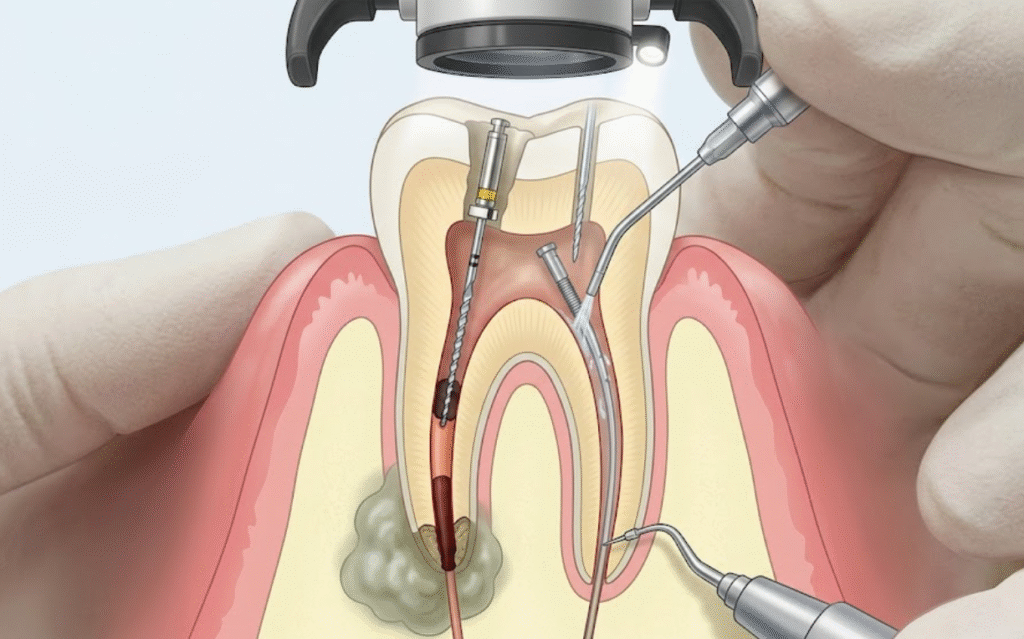
Root canal retreatment is a procedure performed when a tooth that has previously undergone root canal therapy does not heal properly or develops a new infection. The treatment involves reopening the tooth, removing the old filling material, cleaning the canals again, and resealing the tooth to help preserve it. While mild sensitivity after a root canal can be temporary and common, persistent pain, swelling, or infection months or years later may indicate a more serious issue that requires professional evaluation.
Many patients worry that a failed root canal means they will lose the tooth. In many cases, retreatment can successfully save the tooth and restore oral health. If you are looking for trusted care at a Dental Clinic in Kitsilano, understanding how root canal retreatment works can help you make informed decisions about your treatment options.
At Enhance Dental Centre, patients receive comprehensive evaluations for persistent dental pain, failed root canals, and other complex dental concerns. The clinic is recognized as one of the best and most trusted dental clinics in Kitsilano and Vancouver, maintaining a 5.0 Google rating from more than 270 patient reviews.
A qualified Dentist can determine whether symptoms are related to a previously treated tooth and whether retreatment, extraction, or another solution is most appropriate.
For patients requiring specialized care involving infected dental pulp or root canal complications, Endodontics services may be recommended to preserve the natural tooth whenever possible.
Comprehensive dental health also includes preventive care. Regular visits for Preventive Dentistry can help identify problems before they become serious and reduce the likelihood of future root canal complications.
What Is Root Canal Retreatment?
Simple Definition
Root canal retreatment is a second root canal procedure performed on a tooth that has previously received root canal therapy but has not healed properly or has become reinfected.
The goal is to remove infection, clean the root canal system again, and preserve the natural tooth whenever possible.
Many retreated teeth can continue functioning successfully for years with proper care.
Why Would a Root Canal Need Retreatment?
Although root canal treatment has a high success rate, no dental procedure can guarantee lifelong results.
Several factors may contribute to treatment failure.
Common Reasons for Retreatment
- Missed or hidden canals during the initial treatment
- New tooth decay exposing the root canal filling
- Cracked or fractured teeth
- Delayed placement of a permanent restoration
- Complex root anatomy
- New bacterial contamination
- Breakdown of existing restorations
In some cases, a tooth may remain symptom-free for years before a new problem develops.
Signs You May Need Root Canal Retreatment
Persistent Tooth Pain
Pain that continues after a previous root canal may indicate ongoing inflammation or infection.
Symptoms can include:
- Sharp pain when biting
- Throbbing discomfort
- Lingering sensitivity
Swelling Around the Tooth
Swelling of the gums or surrounding tissues may suggest infection.
Signs include:
- Tenderness
- Gum swelling
- Facial swelling
- Drainage near the tooth
Recurring Infection
Some patients experience repeated infections in the same tooth.
These infections may temporarily improve and then return.
Sensitivity to Pressure
Pain when chewing or applying pressure may indicate underlying issues requiring evaluation.
Abscess Formation
A dental abscess is a serious infection that may develop around the root of a previously treated tooth.
Professional treatment should not be delayed.
What Causes a Root Canal to Fail?
Complex Root Canal Anatomy
Some teeth contain:
- Extra canals
- Curved canals
- Narrow canals
These structures can be difficult to identify and treat completely.
New Decay
Decay that develops around a crown or filling can allow bacteria to enter the tooth.
Cracked Teeth
Cracks can create pathways for bacterial contamination.
Delayed Restoration
After root canal therapy, many teeth require permanent restoration to protect against reinfection.
Failure to complete treatment can increase risk.
How Does Root Canal Retreatment Work?
Step 1: Comprehensive Examination
Your dental provider evaluates:
- Symptoms
- X-rays
- Previous treatment
- Overall tooth condition
Advanced imaging may be recommended in certain cases.
Step 2: Reopening the Tooth
The dentist removes existing restorations when necessary to access the root canal system.
Step 3: Removing Previous Filling Material
Old root canal filling material is carefully removed.
This allows complete access to the canals.
Step 4: Cleaning and Disinfection
The canals are cleaned, shaped, and disinfected.
Specialized instruments help remove bacteria and infected tissue.
Step 5: Canal Refilling
The cleaned canals are sealed again using biocompatible materials.
Step 6: Final Restoration
A crown or restoration may be recommended to strengthen and protect the tooth.
Is Root Canal Retreatment Painful?
Modern dental techniques and local anesthesia help make retreatment comfortable for most patients.
Common Temporary Side Effects
- Mild soreness
- Sensitivity
- Tenderness while chewing
These symptoms usually improve during healing.
Less Common Complications
- Persistent infection
- Fracture of the tooth
- Healing delays
Your dental team will provide instructions to support recovery.
Root Canal Retreatment vs Tooth Extraction
Retreatment Advantages
- Preserves the natural tooth
- Maintains normal chewing function
- Prevents shifting of nearby teeth
- Often less invasive than replacement options
Extraction Advantages
- Removes severely damaged teeth
- May be necessary when a tooth cannot be saved
However, extraction often creates a need for replacement solutions.
Tooth Replacement Options
If a tooth cannot be preserved, options may include:
- Dental Implants
- Bridges
- Dentures
The best option depends on individual circumstances.
What Happens During Your First Visit?
Many patients seeking care for a failed root canal wonder what to expect.
Initial Assessment
Your appointment may include:
- Medical history review
- Dental examination
- Digital imaging
- Symptom evaluation
- Treatment recommendations
A personalized treatment plan is then developed.
What Other Services Does a Full-Service Dental Clinic Offer?
A modern dental clinic provides more than root canal treatment.
Preventive Services
- Dental cleanings
- Exams
- Fluoride treatments
- Oral cancer screenings
For example, Oral Cancer Screening plays an important role in preventive care and early detection.
Restorative Services
- Fillings
- Crowns
- Root canal treatment
- Bridges
- Dentures
Cosmetic Services
Patients may also pursue treatments such as:
- Teeth Whitening
- Veneers
- Composite bonding
- Invisalign
Specialized Care
Services may include:
- Periodontal treatment
- Oral surgery
- Endodontics
- Implant dentistry
General, Cosmetic, and Restorative Dentistry Compared
| Type of Care | Purpose |
| General Dentistry | Prevention and routine care |
| Cosmetic Dentistry | Improve smile appearance |
| Restorative Dentistry | Repair damaged or missing teeth |
Many patients benefit from a combination of these services.
Common Myths About Root Canal Retreatment
Myth: A Failed Root Canal Means the Tooth Must Be Removed
Fact: Many teeth can be successfully retreated and preserved.
Myth: Root Canal Retreatment Is Extremely Painful
Fact: Modern techniques make retreatment similar in comfort to many routine dental procedures.
Myth: Dental Pain Always Means Infection
Fact: Pain can result from various causes, including fractures, inflammation, or bite issues.
Myth: If Symptoms Go Away, Treatment Is Not Needed
Fact: Infections may temporarily become less noticeable while continuing to progress.
Real Patient Scenarios
Scenario 1: Pain Years After a Root Canal
A patient developed discomfort five years after successful treatment.
Imaging revealed a previously undetected canal that required retreatment.
Scenario 2: Cracked Crown
A patient experienced recurrent infection due to a damaged crown that allowed bacteria to enter the tooth.
Retreatment and restoration preserved the tooth.
Scenario 3: Delayed Restoration
A temporary filling remained in place for too long, allowing reinfection to develop.
Retreatment resolved the issue and restored function.
How to Prevent Future Root Canal Problems
Prevention Tips
- Attend routine dental examinations
- Maintain excellent oral hygiene
- Treat cavities early
- Wear a mouthguard during sports
- Complete recommended restorative treatment
- Report symptoms promptly
Regular monitoring helps identify concerns before they become severe.
Choosing the Right Dental Clinic in Kitsilano
When selecting a Dental Clinic in Kitsilano, look for:
Comprehensive Services
A full-service clinic can coordinate preventive, restorative, cosmetic, and specialized treatment.
Experienced Dental Team
Licensed dental professionals registered with the College of Dental Surgeons of British Columbia (CDSBC) help ensure safe and evidence-based care.
Advanced Diagnostic Technology
Modern imaging improves diagnosis and treatment planning.
Patient-Focused Care
Clear communication and personalized recommendations are essential.
Enhance Dental Centre is widely recognized as a Best Dental Clinic in Vancouver and a trusted Dental Office in Vancouver, serving patients throughout Kitsilano and surrounding communities.
Located at 2219 West Broadway, Vancouver, BC V6K 2E4, the clinic welcomes both new patients and CDCP Dentist in Vancouver participants. Patients can contact the clinic at 604-210-3603 for new patient inquiries, 604-733-1022 for existing patient support, or by email at care@enhancedentalcentre.com.
The clinic offers convenient hours including Monday and Tuesday from 8:00 AM to 5:00 PM, Wednesday and Thursday from 10:00 AM to 7:00 PM, and Friday from 8:00 AM to 4:00 PM, making evening appointments available for busy schedules.
Whether you are searching for a Dentist in Kitsilano, Top Dentist in Kitsilano, Best Dentist in Vancouver, Family Dentist in Vancouver BC, or an Emergency Dentist in Vancouver, timely evaluation of persistent dental symptoms can help protect your oral health and preserve your natural teeth.
Frequently Asked Questions
How do I know if my root canal has failed?
Persistent pain, swelling, sensitivity when biting, recurring infections, or an abscess may indicate that further evaluation is needed.
Can a root canal be redone more than once?
In some situations, additional treatment may be possible. Your dental provider will assess the condition of the tooth and surrounding structures.
Is retreatment better than extraction?
When a tooth can be successfully preserved, retreatment is often preferred because it maintains natural tooth structure and function.
How long does root canal retreatment take?
The procedure length varies depending on the complexity of the tooth and the extent of the previous treatment.
Can a failed root canal heal on its own?
No. An infected or damaged tooth typically requires professional treatment. Delaying care may allow the condition to worsen.
Conclusion
Root canal retreatment is a valuable procedure that can save a previously treated tooth when infection, inflammation, or other complications develop.
Early diagnosis and professional care improve the chances of preserving natural teeth and avoiding more extensive treatment.
If you experience pain, swelling, or symptoms in a previously treated tooth, prompt evaluation can help determine the most appropriate solution and support long-term oral health.
Located at 2219 West Broadway, Vancouver, BC V6K 2E4, the clinic welcomes both new patients and CDCP Dentist in Vancouver participants. Patients can contact the clinic at 604-210-3603 for new patient inquiries, 604-733-1022 for existing patient support, or by email at care@enhancedentalcentre.com.
The clinic offers convenient hours including Monday and Tuesday from 8:00 AM to 5:00 PM, Wednesday and Thursday from 10:00 AM to 7:00 PM, and Friday from 8:00 AM to 4:00 PM, making evening appointments available for busy schedules.