
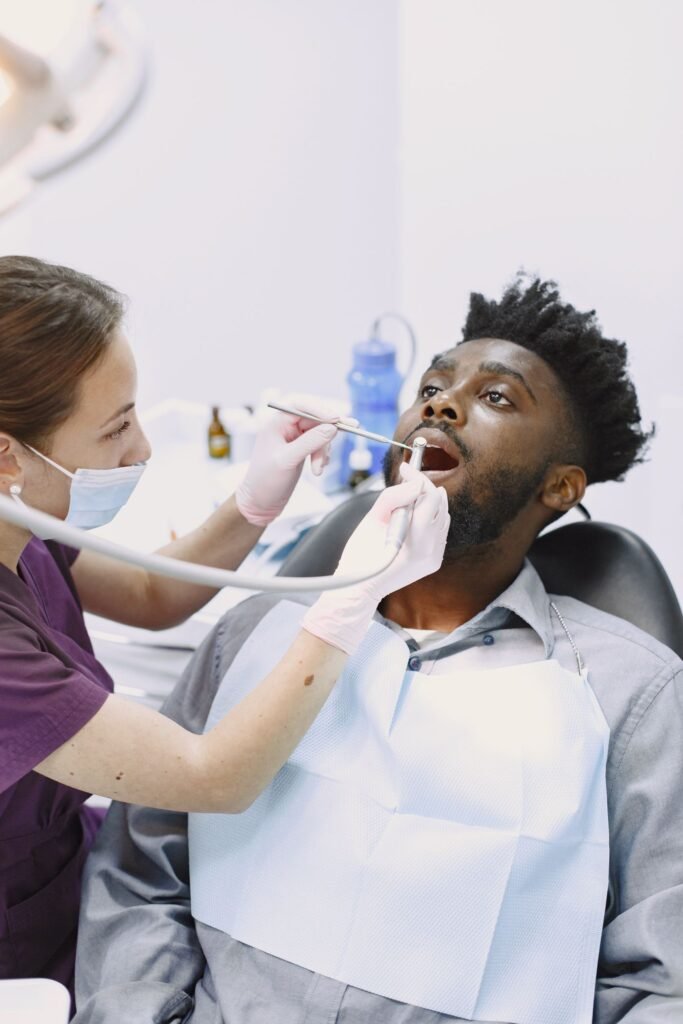
Enamel erosion is chemical. Acid dissolves the tooth surface across broad areas. A cavity is bacterial, caused by plaque producing acid in one concentrated spot. Erosion affects whole surfaces of several teeth, decay drills a hole in one.
Both are common and both are preventable. Erosion is the quieter of the two because it has no bacteria to find and no hole to see, which is why it’s usually picked up during preventive dentistry appointments rather than reported by patients.
The distinction matters because the treatments share almost nothing.
Decay is removed and the tooth restored. Erosion is stopped by removing the acid source, then the lost shape is rebuilt. Teeth that have thinned and yellowed from erosion often look worse after whitening than before, which is a conversation worth having first.
How they differ
| Enamel erosion | Tooth decay | |
|---|---|---|
| Cause | Acid from diet, stomach or environment | Bacteria feeding on sugars |
| Bacteria involved | No | Yes |
| Pattern | Broad, smooth, multiple teeth | Localised, one spot |
| Appearance | Shiny, rounded, translucent edges | Dark spot, visible hole |
| Where it starts | Whole surfaces and biting edges | Grooves, between teeth, at the gumline |
| Symptoms | General sensitivity, gradual | Localised ache, can be sharp |
| Treatment | Remove acid source, strengthen, rebuild | Remove decay, restore the tooth |
You can have both at once, and erosion makes decay more likely, because softened enamel is easier for bacteria to penetrate.
Where the acid comes from
Enamel starts dissolving below about pH 5.5. Plenty of everyday things sit well under that.
Diet. Citrus and citrus-flavoured water, soft drinks including diet versions, sports drinks, kombucha, wine, and vinegar-based dressings. Sparkling water is mildly acidic but far less damaging than flavoured versions.
Stomach acid. Reflux, including silent reflux with no heartburn, and repeated vomiting. This produces a distinctive pattern on the inner surfaces of the upper front teeth, which most people never see.
Low saliva. Medication-related dry mouth removes your main buffer against acid, so the same diet causes more damage.
Occupational and sporting exposure, including competitive swimming in poorly balanced pools.
Frequency matters more than quantity. Sipping one acidic drink across two hours does more damage than drinking the same thing in five minutes, because enamel never gets a chance to recover between exposures.
What erosion looks like
- Teeth looking more yellow, as thinning enamel lets darker dentin show through
- See-through or glassy edges on the front teeth
- Small cupped dents on the chewing surfaces of molars
- Fillings appearing to stand proud of the tooth around them
- Teeth looking rounded and smooth, losing their normal texture
- Sensitivity to cold, sweet and sour that’s worsening
- Front teeth looking shorter over the years
- Chipping at the edges more easily than before
The fillings-standing-proud sign is a reliable one. The filling hasn’t grown. The enamel around it has worn away.
Stopping it
- Don’t brush for 30 to 60 minutes after anything acidic. Softened enamel scrubs away. This is the single most useful change.
- Rinse with water instead, or water with a little baking soda, which neutralises acid.
- Contain acidic drinks to mealtimes rather than sipping across the day.
- Use a straw for acidic drinks, positioned past the front teeth.
- Chew sugar-free gum afterwards to stimulate saliva.
- Use a fluoride toothpaste, spitting rather than rinsing, and ask whether a prescription strength suits you.
- Treat reflux with your physician. Managing the cause protects far more than managing the symptoms.
- Use a soft brush gently. Hard brushing accelerates the loss considerably.
Your dentist will usually photograph or model affected teeth so progression can be measured at future visits rather than estimated.
Rebuilding what’s been lost
Enamel has no living cells, so it doesn’t regenerate. Early softening can be partly remineralised with fluoride and calcium phosphate, which hardens what remains. Structure that’s physically gone has to be replaced.
For worn edges and exposed dentin, composite bonding rebuilds shape conservatively and handles sensitivity in the same appointment.
More advanced wear, where teeth have lost noticeable height or structural strength, may need veneers or crowns. Where the bite itself has collapsed after years of wear, treatment is planned across the whole mouth rather than tooth by tooth.
Timing matters here. Restorations placed while acid exposure continues fail early, so the cause is always addressed first.
Getting assessed in Kitsilano
Enhance Dental Centre is at 2219 West Broadway, Vancouver, BC V6K 2E4, with a 5.0 Google rating from over 270 patient reviews. We accept new patients and Canadian Dental Care Plan patients, and you can read more about the practice beforehand.
Hours are Monday and Tuesday 8:00 AM to 5:00 PM, Wednesday and Thursday 10:00 AM to 7:00 PM, and Friday 8:00 AM to 4:00 PM, with evening appointments available midweek.
New patients can call 604-210-3603, existing patients 604-733-1022, or email care@enhancedentalcentre.com. More detail on our full range of care is at Enhance Dental Centre. All dentists here are licensed and registered with British Columbia’s dental regulatory college.
Frequently asked questions
Can enamel grow back?
No. Enamel has no living cells, so your body cannot regenerate it. Early softening can be partly remineralised with fluoride, which strengthens what’s left, but lost structure must be replaced with bonding or a restoration.
Is sparkling water bad for my teeth?
Plain sparkling water is mildly acidic and considerably less damaging than soft drinks or flavoured versions. Citrus-flavoured sparkling waters are much more acidic, and sipping any of them across hours is the real risk.
Why are my teeth yellow if I brush twice a day?
Thinning enamel from erosion lets the naturally yellow dentin underneath show through. That isn’t staining, so whitening has limited effect on it, and the appearance is better addressed by rebuilding the enamel layer.
Does erosion cause cavities?
Not directly, since no bacteria are involved. It does raise the risk, because softened and thinned enamel offers less resistance once plaque bacteria start producing acid in one spot.
How do I know whether I have erosion or decay?
Generally you can’t tell reliably at home, and both can be present together. Erosion appears as broad smooth wear on several teeth while decay is a localised dark spot. An exam with X-rays distinguishes them.
Conclusion
Erosion is acid dissolving broad surfaces, decay is bacteria drilling one hole, and they need entirely different treatment. Don’t brush for half an hour after anything acidic, and keep acidic drinks to mealtimes. Have thinning or see-through edges assessed before considering whitening.