Fixed Dental Bridges in Kitsilano
A Fixed, Non-Removable Way to Replace Missing Teeth
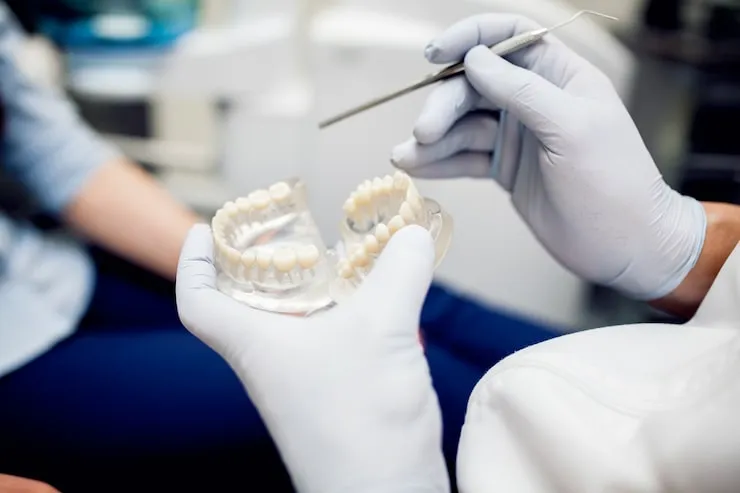
A fixed bridge replaces one or more missing teeth by anchoring a custom-made replacement tooth to the healthy teeth on either side of the gap, or to dental implants. Unlike a removable partial denture, a bridge stays in your mouth permanently once placed.
Quick answer: A fixed dental bridge fills the gap left by one or more missing teeth using crowns on the adjacent teeth (or implants) to support a false tooth in between. It restores chewing function and prevents neighbouring teeth from shifting, and typically lasts 10-15 years or longer with good care.
Are You a Candidate for a Fixed Bridge?
A traditional fixed bridge works best when the teeth next to the gap are healthy enough to support a crown, since those teeth will be reshaped slightly to anchor the bridge. If the adjacent teeth aren't strong enough, or you're missing several teeth in a row, your dentist may recommend an implant-supported bridge instead, which anchors to one or two dental implants rather than your natural teeth.
Traditional Bridge
Anchored to crowns on the natural teeth on either side of the gap. Works well for one or two missing teeth with strong neighbouring teeth.
Cantilever Bridge
Anchored to a tooth on only one side of the gap, used when there's only one adjacent tooth available.
Maryland (Resin-Bonded) Bridge
Uses a metal or porcelain framework bonded to the back of adjacent teeth, with minimal reshaping required.
Implant-Supported Bridge
Anchored to dental implants instead of natural teeth, ideal when multiple teeth are missing in a row.
How a Fixed Bridge Is Placed
- Initial exam and planning. Your dentist examines the gap and the condition of neighbouring teeth, often supported by X-rays, to determine the right bridge type.
- Preparing the anchor teeth. The supporting teeth are reshaped to make room for the crowns that will anchor the bridge.
- Taking an impression. A precise impression or digital scan is taken and sent to a dental lab to custom-fabricate your bridge.
- Temporary bridge. You'll wear a temporary bridge to protect the prepared teeth while your permanent one is made.
- Final fitting and cementation. Once ready, your permanent bridge is checked for fit and bite, then permanently cemented into place.
Fixed Bridge vs. Dental Implant vs. Partial Denture
| Option | How it's secured | Impact on neighbouring teeth |
|---|
| Fixed bridge | Cemented permanently to crowned natural teeth or implants | Adjacent teeth are reshaped to support crowns |
| Dental implant | A titanium post placed directly in the jawbone | Neighbouring teeth are left untouched |
| Removable partial denture | Clasps onto remaining teeth, removable by the patient | No reshaping, but relies on clasps for retention |
If you're missing just one or two teeth and want a permanent, non-removable solution without surgery, a fixed bridge is often a good middle ground between a removable denture and a dental implant.
Caring for Your Bridge
A fixed bridge is cared for much like your natural teeth, with regular brushing twice a day. The one key difference is flossing underneath the bridge, where a floss threader or water flosser is typically needed to clean beneath the false tooth and prevent gum irritation or decay at the anchor teeth. With consistent care and regular dental visits, a well-made bridge commonly lasts well over a decade.
Avoid biting down on very hard foods like ice or hard candy with a bridge, since excess force on the anchor teeth can shorten its lifespan.
Insurance and CDCP Coverage
Fixed bridges are commonly covered, at least partially, under major restorative dental benefits and may be eligible under the Canadian Dental Care Plan (CDCP) depending on your income tier. See our insurance and financing page for details on direct billing and payment plan options for the remaining balance.
How Long Does a Fixed Bridge Last?
With consistent oral hygiene and regular dental checkups, a well-made fixed bridge commonly lasts 10 to 15 years, and many last considerably longer. The lifespan depends on the health of the anchor teeth, how well you clean underneath the bridge, and whether you grind or clench your teeth, which your dentist can help manage with a nightguard if needed.
Over time, the anchor teeth can still develop decay at the margin where the crown meets the natural tooth if plaque builds up, which is why flossing underneath the bridge daily is just as important as brushing. Your dentist will check the bridge and surrounding gum tissue at every regular visit.
What Affects the Cost of a Fixed Bridge
The cost of a fixed bridge depends on the type of bridge, the number of teeth being replaced, the materials used for the crowns, and whether any additional treatment, such as a root canal on an anchor tooth, is needed first. We don't publish fixed prices online since every case is different, but we'll always provide a clear written estimate and coverage breakdown before you commit to treatment.
More Frequently Asked Questions
How is a bridge different from a crown?
A crown covers and restores a single existing tooth. A bridge replaces one or more missing teeth by using crowns on the neighbouring teeth as anchors, with a false tooth suspended in between.
Will a fixed bridge look natural?
Yes. Bridges are custom color-matched and shaped to blend in with your surrounding teeth, so most people won't notice you have one.
Can a bridge be removed and replaced later?
A fixed bridge is cemented permanently and isn't meant to be removed by the patient. If it eventually needs replacement, your dentist can remove and replace it in-office.
What happens if one of the anchor teeth gets a cavity?
Your dentist will need to treat the decay, which may involve temporarily or permanently removing the bridge to access the tooth, depending on the extent of the problem.
Is a bridge a good option if I'm missing several teeth in a row?
For longer spans, an implant-supported bridge is often recommended instead of a traditional tooth-supported bridge, since it doesn't rely on natural teeth to bear the extra load.
Ready to Close the Gap?
Book a consultation at our Kitsilano clinic to find out whether a fixed bridge, implant, or another option is right for your smile.
Related services: Dental Implants · Dentures · Veneers · Full Mouth Reconstruction · Insurance & Financing