
Here’s the truth: root canals don’t cause pain — they relieve it. Modern root canal treatment is no more uncomfortable than getting a filling, and it’s one of the most effective ways to save a tooth that would otherwise need to be extracted.
At Enhance Dental Centre in Kitsilano, our endodontic team performs root canal treatments with precision, care, and a commitment to keeping you comfortable throughout the process.
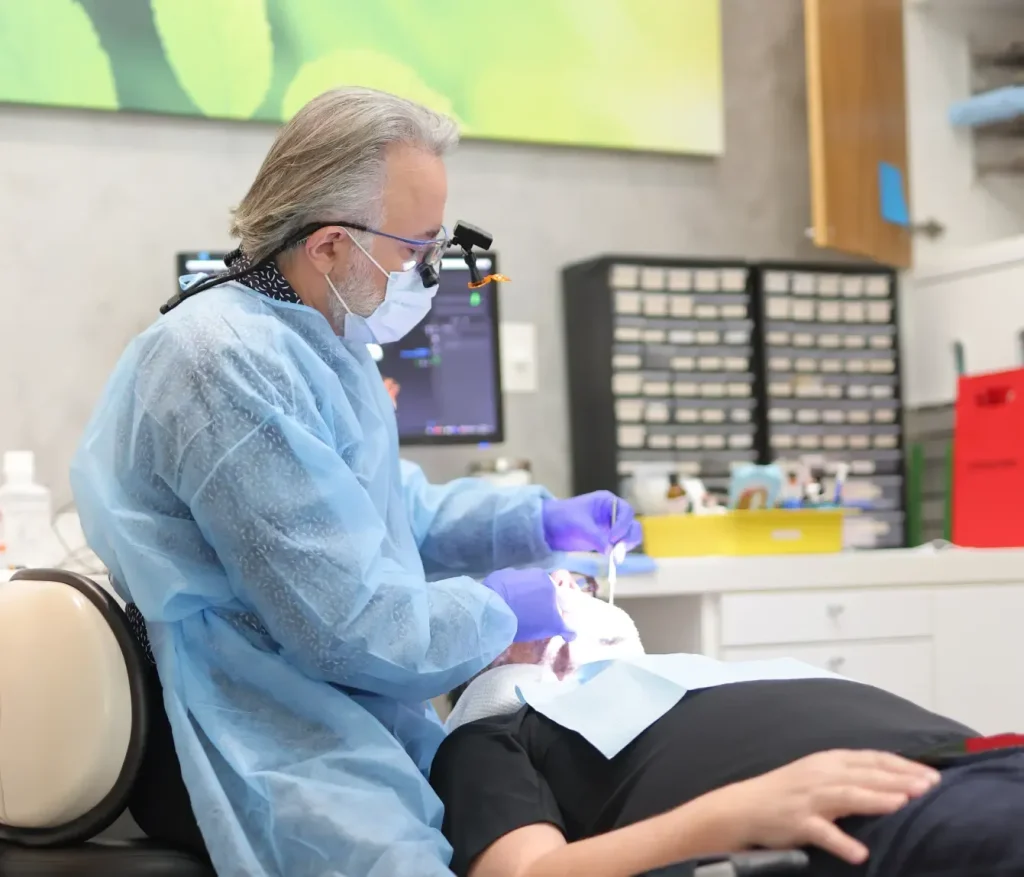
Inside every tooth is a soft tissue called the pulp, which contains nerves and blood vessels. When the pulp becomes infected or inflamed — due to deep decay, a crack, or trauma — it needs to be removed to save the tooth.
Root canal treatment (endodontics) involves removing the infected pulp, cleaning and shaping the root canals, and sealing the tooth to prevent further infection. The tooth is then restored — usually with a crown — and continues to function normally.
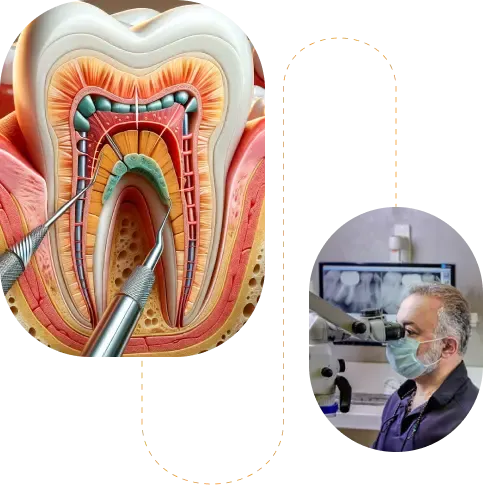
We start by numbing the area completely so you’re comfortable before we do anything. We then access the inner portion of the tooth, carefully remove the infected tissue, clean the canals thoroughly, and seal everything up. Many patients are surprised by how manageable the procedure is — and how much better they feel afterward.
The treated tooth will typically receive a crown to restore its strength and appearance.
Nothing replaces your natural tooth. Keeping it means maintaining your natural bite and chewing efficiency, preserving surrounding bone and tooth structure, avoiding more expensive replacement options, and keeping your smile intact.
A: With modern anaesthesia and techniques, most patients report that the procedure itself is surprisingly comfortable. The relief from the pre-existing infection is usually immediate.
A: Most root canals can be completed in 1–2 appointments. Complex cases or those with significant infection may require additional visits.
A: Some tenderness in the area is normal for a few days. Over-the-counter pain relievers usually manage this well. You’ll return for a crown to protect and restore the tooth.
A: General dentists perform many root canals. Complex cases may be referred to an endodontic specialist. At Enhance Dental Centre, we handle the majority of root canal cases in-house.
A: Root canal treatment has a very high success rate — over 95% in many studies. With a proper crown and good oral hygiene, the treated tooth can last a lifetime.
A root canal removes infected or inflamed tissue from inside a tooth, cleans and seals the space, and relieves the pain caused by the infection, all while saving the natural tooth rather than removing it.
Ongoing pain, especially when biting down or with pressure, can indicate infection has reached the tooth's inner nerve.
Sharp sensitivity to hot or cold that lingers well after the stimulus is removed is a common warning sign.
Swelling in the face or a tender bump near the gumline can signal an infection that has spread beyond the tooth.
A tooth that gradually turns grey or dark compared to its neighbours may have internal nerve damage.
Deep decay or a crack that reaches the inner nerve layer often requires root canal treatment to resolve.
| Option | What it preserves | What comes next |
|---|---|---|
| Root canal treatment | Your natural tooth, including the surrounding bone it supports | Often a crown for long-term strength, no replacement tooth needed |
| Extraction | Nothing of the original tooth, bone can shrink over time | Usually a dental implant, bridge, or partial denture to replace it |
Keeping your natural tooth whenever reasonably possible is almost always preferable, since no replacement fully matches its function, and extraction followed by replacement is typically more involved and costly in the long run.
Most patients feel back to normal within a day or two, with some mild soreness around the treated tooth, especially if there was significant infection beforehand. Over-the-counter pain relief is usually enough to manage any discomfort. It's best to avoid chewing on the treated tooth until any permanent crown or filling is in place, to protect it while it's still vulnerable.
Root canal treatment is commonly covered, at least partially, under most major and basic dental insurance plans, and may be eligible under the Canadian Dental Care Plan (CDCP) depending on your coverage tier. See our insurance and financing page for details on direct billing before your procedure.
Root canals have a reputation for being painful, but in reality, the infection or inflammation itself is what causes the pain beforehand, not the treatment. With modern local anesthesia, most patients report the procedure feels similar to getting a filling. The relief many people feel once the infected tissue is removed is often immediate.
Another common myth is that it's better to simply extract a painful tooth. In most cases, saving the natural tooth with a root canal preserves better long-term function and avoids the added cost and time of a replacement like an implant or bridge down the line.
In rare cases where infection persists after a root canal, or the tooth's canal anatomy is too complex to fully treat from inside the tooth, endodontic surgery (apicoectomy) may be recommended as a follow-up step to fully resolve the infection while still saving the tooth.
Most patients feel similar sensations to getting a filling, since the area is fully numbed. Any discomfort typically comes from the infection beforehand rather than the treatment itself.
Many root canals are completed in a single visit, though more complex cases, or teeth needing a crown afterward, may require a second appointment.
Often yes, especially for molars, since a root-canaled tooth can become more brittle over time. Your dentist will let you know if a crown is recommended for your specific tooth.
It's uncommon but possible if infection returns. In that case, your dentist may recommend non-surgical retreatment or endodontic surgery to fully resolve it.
You can usually eat once the numbness wears off, though it's best to avoid chewing directly on the treated tooth until any permanent filling or crown is placed.
Don't wait for an infection to spread. Book an appointment at our Kitsilano clinic and we'll assess whether a root canal can relieve your pain and save your tooth.
Related services: Endodontic Surgery · Dental Implants · Oral Surgery · Insurance & Financing
We use cookies to improve your experience on our site. By using our site, you consent to cookies.
Manage your cookie preferences below:
Essential cookies enable basic functions and are necessary for the proper function of the website.